How to Identify a Reputable Maine Coon Breeder
Bringing a Maine Coon into your family is a significant commitment — financially, emotionally, and for the next 12–18 years of that cat's life. Who you buy from matters enormously. A reputable breeder invests in the health, temperament, and genetic integrity of their cats, while irresponsible breeders cut corners at the expense of the animals. Knowing how to tell the difference can save you heartbreak, unexpected veterinary bills, and the ethical weight of supporting poor breeding practices.
Why Choosing the Right Breeder Matters
Maine Coons are predisposed to several genetic health conditions, including hypertrophic cardiomyopathy (HCM), spinal muscular atrophy (SMA), polycystic kidney disease (PKD), and hip dysplasia. Responsible breeders screen for these conditions and make informed breeding decisions to reduce the risk of passing them on. When you buy from an untested breeder, you're essentially rolling the dice on your kitten's long-term health.
Beyond genetics, the early weeks of a kitten's life are critical for socialization. Kittens raised in a home environment — handled by people, exposed to normal household sounds, and allowed to stay with their mother and siblings until an appropriate age — grow into confident, well-adjusted adults. Kittens from kitten mills or careless breeders often miss these crucial developmental windows.
Green Flags: Signs of a Reputable Breeder
When evaluating a Maine Coon breeder, look for these positive indicators:
- Comprehensive health testing: The gold standard includes HCM screening and DNA testing for SMA and PKD. Results should be available for both parents of any litter.
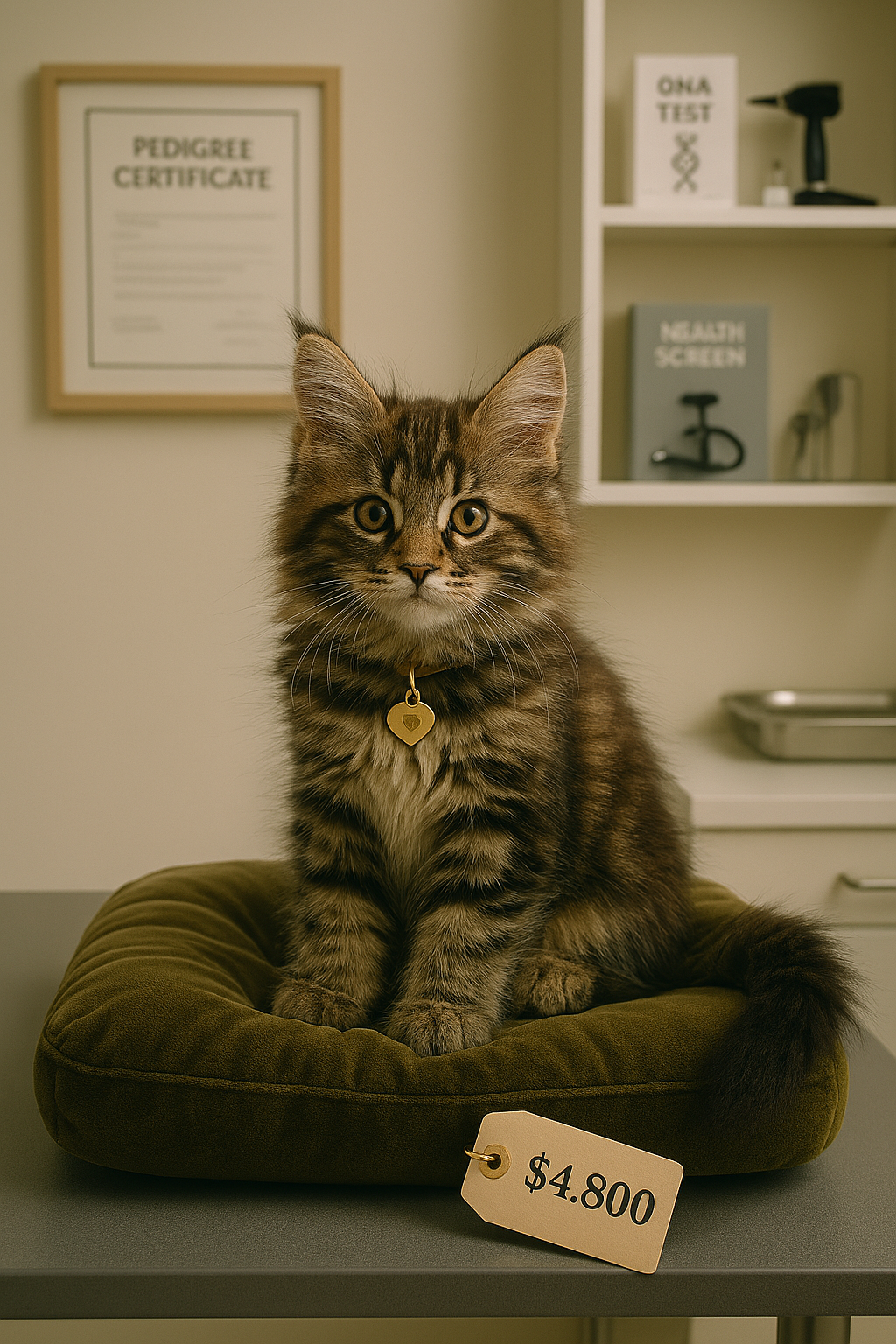
- TICA and/or CFA registration: Reputable breeders register their cattery and litters with recognized cat registries such as The International Cat Association (TICA) or the Cat Fanciers' Association (CFA). Registration provides pedigree documentation and breed verification.
- Socialization practices: Kittens should be raised underfoot in the home, not isolated in cages or outbuildings. Good breeders expose kittens to a variety of people, sounds, textures, and experiences during the critical socialization window (2–7 weeks).
- Written health guarantee: A reputable breeder stands behind their kittens with a written health guarantee covering genetic conditions, typically for 2–5 years. The terms should be clear and fair.
- Takes kittens back: Ethical breeders include a clause in their contract requiring or strongly encouraging buyers to return the kitten/cat to the breeder if they can no longer keep it — at any point in the cat's life. This is one of the strongest indicators of a breeder who genuinely cares about their animals.
- Keeps kittens until 12–16 weeks: Responsible breeders do not release kittens before 12 weeks of age, and many wait until 14–16 weeks. This ensures proper weaning, socialization, and completion of initial vaccination series.
- Transparent and communicative: Good breeders welcome questions, provide references from previous buyers, and are happy to show you where the cats live. They'll also ask you plenty of questions in return — they want to make sure their kittens are going to great homes.
- Spay/neuter requirement for pets: Most reputable breeders require that pet-quality kittens be spayed or neutered, often before going home or with a contractual obligation.
"A good breeder will ask you just as many questions as you ask them. They're not just selling a kitten — they're entrusting you with a life they've invested deeply in."
Red Flags: Warning Signs to Watch For
Not every breeder advertising Maine Coon kittens has the cats' best interests at heart. Be cautious if you encounter any of the following:
- No health testing: If a breeder cannot provide documentation of HCM screening, SMA/PKD DNA testing, or hip evaluations for their breeding cats, walk away. "My cats are healthy" or "I've never had a problem" is not a substitute for testing.
- Ships kittens too young: Any breeder willing to send kittens home before 10–12 weeks is prioritizing sales over the kitten's wellbeing. Kittens separated too early often develop behavioral issues.
- Breeds multiple cat breeds (or breeds cats and dogs): While not an automatic disqualifier, breeders who breed many different breeds simultaneously are often running a volume operation. Specialization indicates expertise and dedication.
- No contract: If a breeder doesn't put the terms of the sale in writing — including health guarantee, return policy, and spay/neuter requirements — there's no accountability.
- Unrealistically low prices: Maine Coon kittens from health-tested, registered parents typically cost $2,000–$4,000+ depending on lineage and region. A "purebred Maine Coon" listed for $500–$800 is almost certainly not what it claims, or the breeder is cutting significant corners on health care and testing.
- Won't let you see the parents: If a breeder won't show you the living conditions of their cats, something is likely being hidden.
- Always has kittens available: Reputable breeders typically have waitlists. If a breeder always seems to have kittens available for immediate purchase, they may be over-breeding.
- No pedigree or registration papers: Without registration, you have no way to verify the kitten's breed, lineage, or that the breeder is upholding breed standards.
Questions to Ask a Breeder
When speaking with a potential breeder, come prepared with specific questions. How they respond tells you a great deal about their practices and priorities:
- What health testing do you perform on your breeding cats? Can I see the results?
- Are your cats and kittens registered with TICA or CFA?
- At what age do you release kittens to their new homes?
- Can I visit your cattery and meet the parents?
- Do you provide a written health guarantee? What does it cover and for how long?
- What is your policy if a buyer can no longer keep the cat?
- How do you socialize your kittens?
- What vaccinations and veterinary care will the kitten have received before going home?
- Do you require spay/neuter for pet kittens?
- Can you provide references from previous kitten buyers?
- What food do you feed, and will you provide a transition supply?
- What ongoing support do you offer after purchase?
A reputable breeder will answer all of these questions willingly and in detail. If someone becomes evasive, defensive, or dismissive when asked about health testing or contracts, consider it a serious red flag.
Understanding Contracts and Guarantees
A breeder's contract is a legal document that protects both the buyer and the breeder. Read it thoroughly before signing, and don't hesitate to ask for clarification on any clause. Key elements to look for include:
- Health guarantee terms: What genetic conditions are covered? For how long? What happens if a covered condition is diagnosed — refund, replacement, or shared veterinary costs?
- Spay/neuter requirements: Most pet contracts require sterilization by a specified age. Failure to comply may void the health guarantee.
- Return/rehoming clause: Does the breeder require first right of refusal if you can no longer keep the cat? This is a hallmark of an ethical breeder.
- Indoor-only requirement: Many breeders require that their kittens be kept as indoor-only cats for safety.
- Declawing prohibition: Reputable breeders universally prohibit declawing in their contracts.
- Registration details: The contract should specify registration papers or transfer of ownership paperwork.
The Investment Is Worth It
Yes, a kitten from a reputable, health-tested breeder costs more upfront. But consider what you're actually paying for: years of health testing, veterinary care for breeding cats, quality nutrition, proper socialization, registration fees, and the breeder's expertise and ongoing support. You're also getting peace of mind — knowing that your kitten has the best possible chance at a long, healthy life.
The alternative — buying a cheap kitten from an untested source — often leads to heartbreaking (and expensive) health surprises down the road. A single HCM diagnosis or hip dysplasia surgery can cost far more than the price difference between a responsibly bred kitten and a backyard-bred one.
Protecting Yourself from Kitten Scams
Unfortunately, the popularity of Maine Coons has attracted scammers who prey on eager buyers. These fraudsters typically operate through social media, classified ads, or slick websites using stolen photos of someone else's cats. They offer "purebred Maine Coon kittens" at suspiciously attractive prices, collect a deposit (or full payment), and then disappear — leaving you without a kitten or your money.
Kitten scams have become increasingly sophisticated. Some scammers create entire fake websites with stolen images, fabricated testimonials, and even fake registration numbers. They may pressure you to send money quickly via wire transfer, Zelle, Venmo, or cryptocurrency — methods that are difficult or impossible to reverse.
Common Signs of a Kitten Scam
- Prices that seem too good to be true: If a "purebred, health-tested Maine Coon" is listed for a fraction of what reputable breeders charge, it's almost certainly a scam.
- No video calls or live interaction: Scammers avoid video calls because they don't actually have the kittens. If a breeder refuses to show you the kitten live on camera, that's a major warning sign.
- Pressure to pay immediately: Phrases like "someone else is interested" or "this kitten won't last" are classic high-pressure tactics designed to make you act before you think.
- Untraceable payment methods: Legitimate breeders accept standard payments. Be extremely cautious of anyone who insists on wire transfers, gift cards, or cryptocurrency only.
- Stolen or stock photos: Do a reverse image search on any kitten photos. If the same images appear on multiple websites or belong to a different breeder, it's a scam.
- No verifiable location or cattery: Scammers are vague about where they're located and will never invite you to visit. A real breeder has a real address and is proud to show you their cattery.
- No contract or health guarantee: A scammer won't provide a signed contract because they have no intention of delivering a kitten, let alone standing behind one.
How to Protect Yourself
- Insist on a video call: Ask to see the kitten live on FaceTime, Zoom, or a similar platform. A real breeder will happily show you the kitten, its parents, and the environment it's being raised in.
- Ask for a personalized video: Request a video of the kitten with a handwritten note showing your name or a specific word you choose. Scammers cannot produce this because they don't have the kittens.
- Verify registration: Ask for the breeder's TICA or CFA cattery registration number and verify it directly with the registry.
- Do a reverse image search: Right-click any kitten photos and search Google Images to see if they appear elsewhere online.
- Check references and reviews: Look for the breeder on Facebook groups, breed forums, and Google reviews. Reach out to previous buyers directly.
- Visit in person if possible: Nothing replaces an in-person visit. If distance is an issue, a thorough video tour of the cattery is the next best thing.
- Trust your instincts: If something feels off — if a deal seems too good, if answers are evasive, if the communication feels scripted — walk away. There are plenty of legitimate breeders who will earn your trust.
What We Do at MaineCoonXLT
At MaineCoonXLT, we take buyer confidence seriously. We know that purchasing a kitten — especially online or from a distance — requires a tremendous amount of trust. That's why we go above and beyond to prove that our kittens are real, healthy, and exactly as represented:
- Video calls before deposit: We offer live video calls so you can see your kitten in real time, ask questions, and meet us face-to-face before any money changes hands.
- Personalized kitten videos: Once your application is accepted and before we take a deposit, we send you a video of your kitten along with a personalized message — proof that the kitten exists, is in our care, and is being raised with love.
- Open communication: We encourage questions at every stage of the process and provide regular photo and video updates as your kitten grows.
- Verifiable credentials: Our TICA registration, health testing results, and references from previous families are always available upon request.
We believe that if a breeder is unwilling to prove the authenticity of their kittens through live video and personalized content, you should question why — and look elsewhere.
At MaineCoonXLT, we believe in full transparency about our health testing, practices, and guarantees. You can learn more about our commitment to responsible breeding on our Our Guarantee page, or contact us with any questions — we're always happy to talk about what ethical breeding looks like.