Why Maine Coon Kittens Are Expensive: The Real Cost of Responsible Breeding
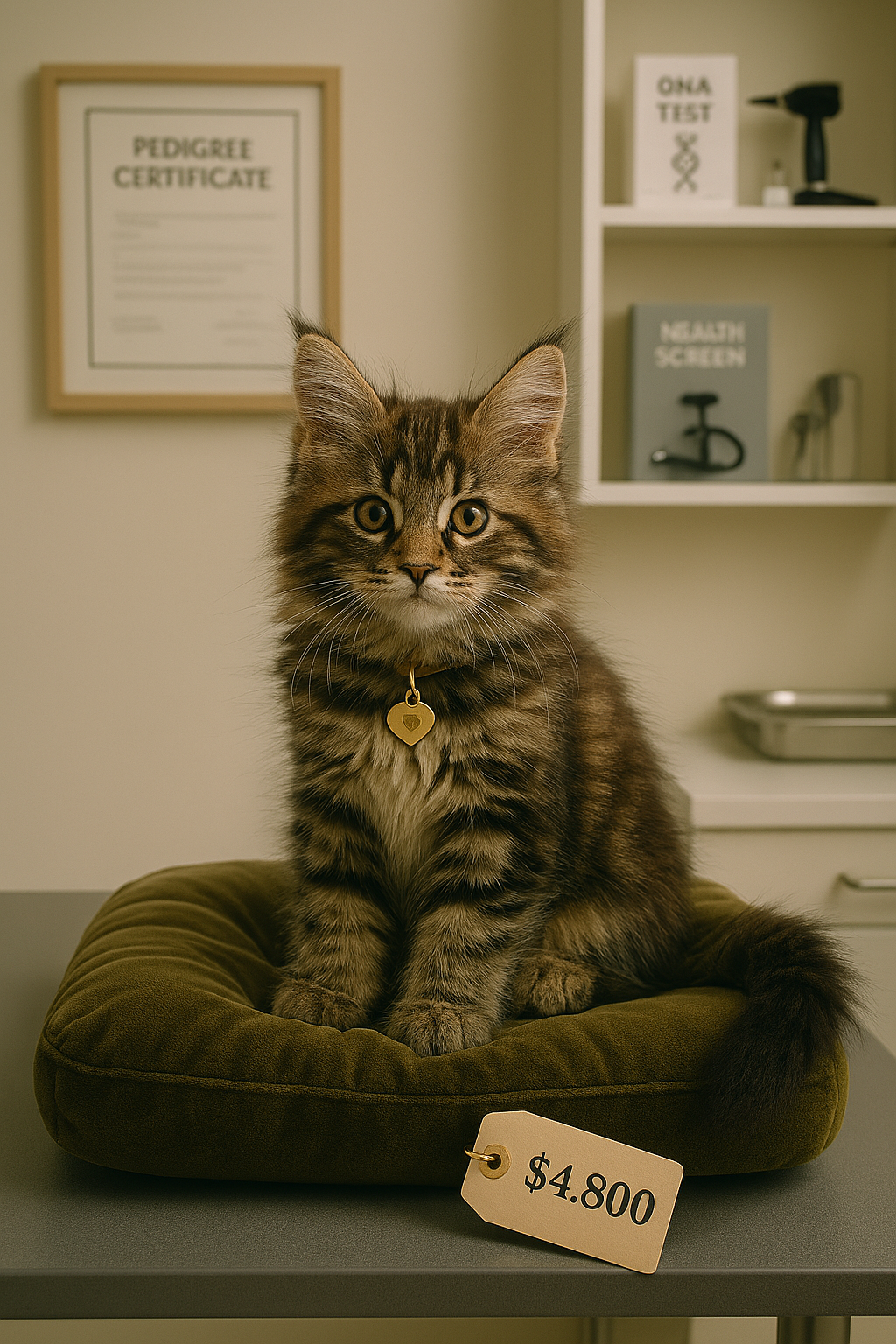
If you've ever searched for a Maine Coon kitten from a reputable breeder, you've likely noticed the price tag — typically $2,000–$4,000 or more. For many first-time buyers, this raises an obvious question: why are Maine Coon kittens so expensive? The short answer is that responsible breeding is extraordinarily expensive, time-consuming, and labor-intensive. The price of a kitten reflects years of investment in health, genetics, veterinary care, nutrition, socialization, and the breeder's ongoing expertise and support.
Let's break down exactly where that money goes — and why cutting corners on price almost always means cutting corners on the kitten's health and wellbeing.
Acquiring Quality Breeding Cats
Responsible breeding starts long before a single kitten is born. It begins with acquiring breeding-quality cats from established, reputable lines. A breeding-quality Maine Coon from health-tested, championship lines typically costs $3,000–$6,000+ per cat. These aren't random cats — they're carefully selected for health, temperament, conformation to the breed standard, and genetic diversity.
Many breeders travel across the country or internationally to find the right cats for their program, adding travel and shipping costs to the equation. Some purchase breeding rights from top catteries in Europe, where Maine Coon breeding programs are among the most advanced in the world. The cost of importing a single cat from overseas — including airfare, health certificates, quarantine compliance, and customs — can easily exceed $5,000.
Genetic Health Testing
This is one of the most significant ongoing expenses for a responsible breeder, and it's also one of the primary reasons ethically bred kittens cost more. Maine Coons are predisposed to several genetic health conditions, and reputable breeders screen for all of them:
- HCM Screening (Echocardiogram): Hypertrophic cardiomyopathy is the most common heart disease in cats. An echocardiogram performed by a veterinary cardiologist costs $400–$600 per cat, per scan. Breeding cats should be screened annually — meaning a breeder with 5 cats spends $2,000–$3,000 per year on HCM screening alone.
- DNA Testing (SMA, PKD, and more): DNA panels for spinal muscular atrophy, polycystic kidney disease, and other genetic markers run $100–$300 per cat. These are typically one-time costs but must be done for every breeding animal.
- Hip X-rays (OFA/PennHIP): Hip dysplasia is another concern in Maine Coons. X-rays ($200–$400) must be taken under sedation and submitted to OFA or PennHIP for evaluation ($35–$50 per submission). Again, this is per cat.
- Blood Panels and Infectious Disease Testing: FeLV/FIV testing, complete blood counts, and chemistry panels are standard before any breeding takes place. These run $150–$300 per cat annually.
For a cattery with 5–8 breeding cats, annual health testing alone can easily total $5,000–$10,000 — and that's before a single kitten is born.
Veterinary Care for Breeding Cats
Beyond genetic testing, breeding cats require regular and sometimes specialized veterinary care:
- Annual wellness exams and vaccinations
- Dental cleanings and dental work as needed
- Prenatal care for pregnant queens
- Emergency C-sections when natural delivery isn't possible (these can cost $2,000–$5,000)
- Post-natal veterinary checks for mothers and newborns
- Treatment for any complications — mastitis, uterine infections, retained placentas
- Spay/neuter surgeries for retired breeding cats
Breeding isn't predictable. Complications happen, and responsible breeders don't hesitate to seek veterinary care — day or night. Emergency veterinary visits, overnight hospitalization, and intensive care for a struggling queen or kitten can add thousands of dollars to the cost of a single litter.
Kitten Veterinary Care
Every kitten born in a responsible cattery receives comprehensive veterinary care before going to their new home:
- Multiple veterinary wellness exams — typically 2–3 vet visits before the kitten goes home
- Vaccination series — FVRCP vaccines at 8, 12, and sometimes 16 weeks ($25–$50 per vaccine, per kitten)
- Deworming protocols — multiple rounds of deworming medication throughout the first weeks of life
- Fecal testing — to ensure kittens are parasite-free
- Microchipping — permanent identification for every kitten ($50–$75 per kitten)
- Spay/neuter surgery — many breeders alter pet-quality kittens before placement ($200–$400 per kitten)
- Health certificates — required for transport, issued by a licensed veterinarian ($50–$100)
For a litter of 5 kittens, veterinary costs alone can run $2,000–$4,000 — before factoring in any complications or additional care needs.
Nutrition: Premium Food Isn't Cheap
Breeding cats and growing kittens need high-quality nutrition — not grocery store cat food. Responsible breeders feed premium kitten food, high-quality wet food, and often supplement with raw or fresh diets. A pregnant or nursing queen eats significantly more than a normal cat, and growing kittens are fed multiple meals per day.
Monthly food costs for a cattery of 5–8 cats plus active litters can easily reach $500–$1,000. Over the course of a year, that's $6,000–$12,000 just on food. This doesn't include supplements like lysine, probiotics, and omega fatty acids that many breeders add to support immune health and coat quality.
Registration and Cattery Expenses
Running a registered cattery involves ongoing administrative costs that add up quickly:
- TICA or CFA cattery registration — annual fees to maintain cattery status
- Individual cat and litter registrations — each breeding cat and every litter must be registered ($10–$25 per registration)
- Show entry fees — many breeders show their cats to earn titles and validate their breeding program. Show entries, travel, hotels, and grooming supplies can cost $500–$2,000 per show weekend
- Insurance — liability insurance, pet health insurance for breeding cats, and sometimes business insurance
- Website and marketing — professional photography, website hosting, and social media presence
- Continuing education — genetics courses, breeding seminars, veterinary conferences, and breed-specific workshops
Housing and Equipment
Breeding cats and kittens need appropriate living spaces. Many breeders dedicate entire rooms (or build custom spaces) for their cattery:
- Cat trees, climbing structures, and enrichment ($500–$2,000+)
- Queening/birthing boxes and heating pads
- Isolation spaces for new cats (quarantine protocol)
- Premium litter, litter boxes, and cleaning supplies ($200–$500/month)
- Air purifiers, sanitization equipment
- Kitten playpen areas and socialization supplies
- Grooming tools — combs, clippers, shampoos, dryers
The Time Investment
Perhaps the most undervalued cost of responsible breeding is time. Breeding is not a passive activity — it's a 24/7 commitment:
- Monitoring pregnancies — watching for signs of distress, managing nutrition, and preparing for delivery
- Attending births — many breeders stay up through the night during deliveries, ready to intervene if complications arise
- Hand-feeding — if a queen can't nurse or rejects a kitten, the breeder bottle-feeds every 2–3 hours around the clock for weeks
- Daily socialization — handling every kitten multiple times daily from birth, introducing them to sounds, textures, people, and experiences
- Health monitoring — daily weight checks for newborns, watching for signs of illness, administering medications and supplements
- Screening buyers — reviewing applications, conducting interviews, video calls, and matching kittens with the right families
- Ongoing support — answering questions from kitten families for the life of the cat
Most reputable breeders don't make a profit — or make very little — when you factor in the true cost of their time. They breed because they love the breed and are committed to improving it, not because it's a lucrative business.
"When you buy a kitten from a responsible breeder, you're not just paying for a cat — you're paying for years of health testing, thousands of dollars in veterinary care, premium nutrition, expert socialization, and a lifetime of breeder support. You're investing in peace of mind."
What Happens When You Buy Cheap
It's tempting to look at a $500 "purebred Maine Coon" and wonder why you'd pay four times that amount elsewhere. The reality is that a $500 kitten almost certainly comes with hidden costs:
- No health testing — the parents likely haven't been screened for HCM, SMA, PKD, or hip dysplasia. You're gambling on your kitten's genetics.
- Minimal veterinary care — the kitten may have missed vaccinations, deworming, or wellness exams.
- Poor socialization — kittens raised in cages, garages, or outbuildings without proper human interaction often develop behavioral issues that last a lifetime.
- No guarantee — if the kitten develops a genetic health condition, you're on your own. A single HCM diagnosis or hip surgery can cost $3,000–$10,000+.
- No support — backyard breeders and kitten mills typically offer no post-sale guidance. When problems arise, there's no one to call.
- May not even be a Maine Coon — without registration papers and a verified pedigree, there's no guarantee you're actually getting the breed you think you are.
The "savings" from buying a cheap kitten often disappear quickly when unexpected veterinary bills arrive. And the emotional cost of dealing with a seriously ill pet is immeasurable.
A Rough Cost Breakdown Per Litter
To put things in perspective, here's an approximate breakdown of what a responsible breeder invests in a single litter of 4–5 kittens:
| Expense Category | Estimated Cost |
|---|---|
| Annual health testing (breeder's share per litter) | $1,500 – $3,000 |
| Prenatal & postnatal vet care for queen | $500 – $2,000 |
| Kitten vet care (exams, vaccines, deworming) | $1,500 – $3,000 |
| Spay/neuter (if done before placement) | $800 – $2,000 |
| Microchipping | $250 – $375 |
| Food & supplements (queen + kittens, 16 weeks) | $800 – $1,500 |
| Registration fees (litter + individual kittens) | $75 – $200 |
| Litter, supplies, cleaning | $300 – $600 |
| Go-home kits (food, toys, blanket, records) | $200 – $400 |
| Total Per Litter | $5,925 – $13,075 |
Divide that by 4–5 kittens and you can see that the per-kitten cost to the breeder is $1,200–$2,600+ — and this doesn't include the initial cost of acquiring breeding cats, ongoing cattery overhead, show expenses, or the breeder's time. When a breeder charges $2,500–$4,000 for a kitten, their profit margin is razor thin or nonexistent.
What You're Really Paying For
When you purchase a kitten from a responsible breeder, you're not just buying a cat. You're investing in:
- A kitten with a known, documented health history
- Parents that have been screened for genetic diseases
- Proper socialization during the critical developmental window
- A complete vaccination and deworming protocol
- TICA or CFA registration proving breed authenticity
- A written health guarantee that protects you for years
- A microchipped, vet-checked, ready-to-go-home kitten
- A breeder who will answer your questions for the life of your cat
- Peace of mind that you've supported ethical breeding practices
At MaineCoonXLT, every dollar of our kitten pricing goes directly back into the care of our cats and kittens. We're transparent about our practices because we believe you deserve to know exactly what you're paying for. Visit our Our Guarantee page to learn more, or contact us — we're always happy to walk you through exactly what goes into raising a MaineCoonXLT kitten.