Stress-Free Bathing for Your Maine Coon: A Step-by-Step Guide
Why Bathe a Maine Coon?
Many cat owners wonder if bathing is really necessary. For most short-haired cats, it usually isn't — they handle self-grooming just fine. But Maine Coons are a different story. Their semi-long, dense coats require more maintenance than the average cat, and regular bathing is an important part of a comprehensive grooming routine.
There are several reasons why your Maine Coon may benefit from periodic baths:
- Oil buildup: Maine Coons have a naturally oily coat that helps repel water. Over time, this oil accumulates — especially along the back, at the base of the tail, and on the belly — making the fur look greasy, stringy, or clumped.
- Coat maintenance: Bathing removes loose undercoat, dander, and debris that brushing alone can't reach. A clean coat is easier to comb through and less prone to matting.
- Skin health: Regular bathing helps keep the skin clean and can reduce dander, which is beneficial for both the cat and allergy-prone family members.
- Show preparation: If you show your Maine Coon, bathing is essential before every show to present the coat at its absolute best.
- Odor control: While cats are generally clean animals, a Maine Coon with significant oil buildup or a dirty coat can develop a noticeable musky odor.
Desensitization: Before the First Bath
The biggest mistake people make is throwing their cat into a sink full of water with no preparation. This creates panic, scratches, and a cat that will flee at the sound of running water for years to come. Desensitization is the key to stress-free bathing.
Start desensitization well before the first bath — ideally when your Maine Coon is still a kitten. Follow these steps over several days or weeks:
- Water sounds: Run the faucet or shower while your cat is in the bathroom, but don't put them near the water. Offer treats and praise for calm behavior. Repeat daily.
- Paw dipping: With lukewarm water in a shallow container, gently dip one paw at a time. Reward immediately with a high-value treat. Keep sessions very short (30 seconds to 1 minute).
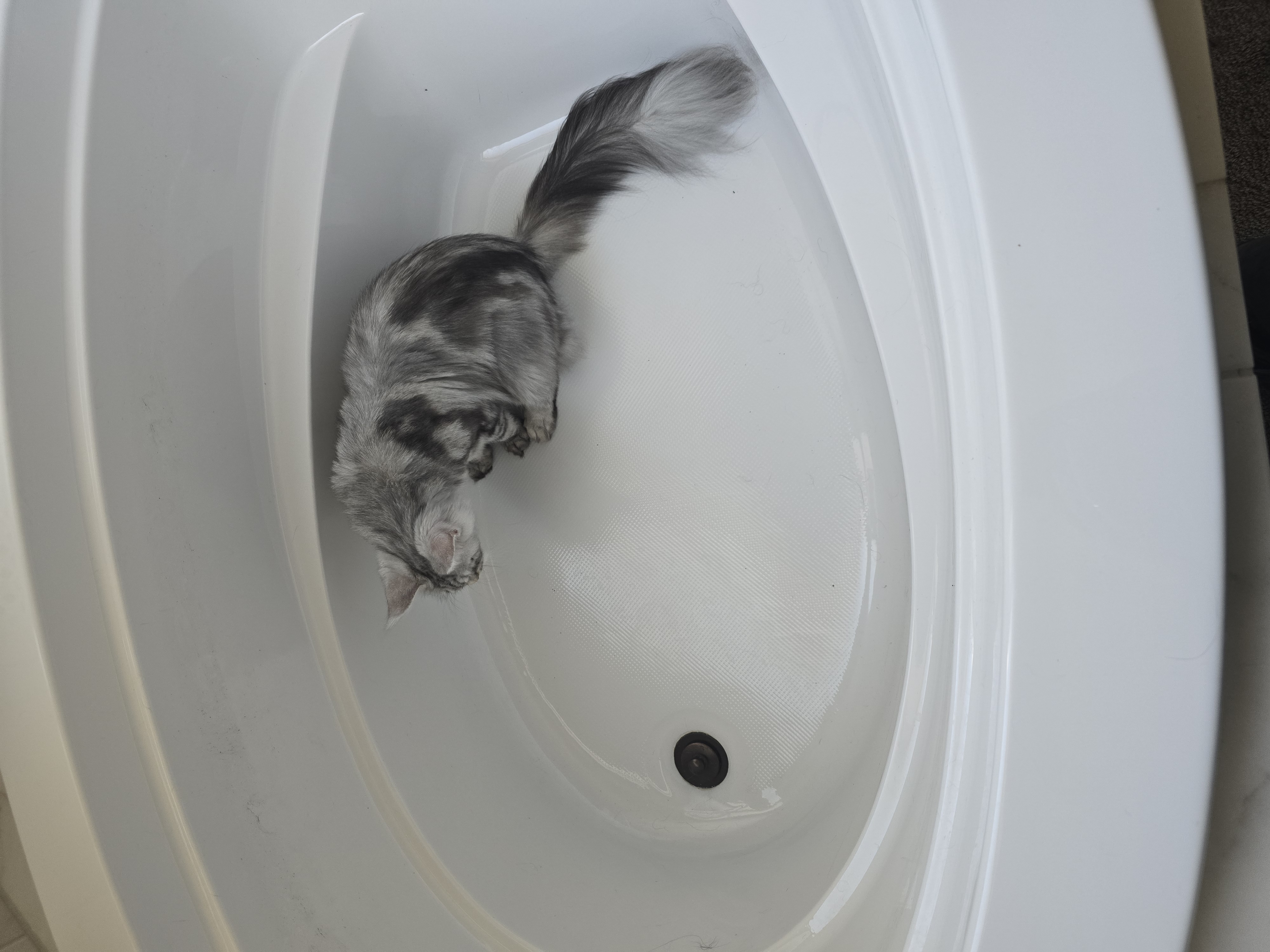
- Standing in water: Place your cat in a sink or tub with just a half-inch of lukewarm water. Let them stand in it briefly, treating and praising throughout. Don't splash or pour water yet.
- Gentle wetting: Using a cup or low-pressure sprayer, wet a small area of the body (like the back). Click and treat if you've clicker-trained your cat. End the session while things are still going well.
"The goal of desensitization isn't to make your cat love baths — it's to make the experience tolerable. A calm, resigned cat is a success. You don't need enthusiasm, just cooperation."
Supplies You'll Need
Having everything prepared and within arm's reach before you start the bath is essential. You do not want to leave a wet cat unattended to search for a towel.
- Cat-specific shampoo: Never use human shampoo, dish soap, or dog shampoo. Cat-specific formulas are pH-balanced for feline skin. Look for gentle, soap-free formulas. For greasy coats, a degreasing shampoo works wonders.
- Conditioner (optional): A cat-safe conditioner can help with detangling and adds silkiness to the coat. It's especially helpful for Maine Coons with dense, thick fur.
- Non-slip mat: Place a rubber mat, silicone mat, or even a folded towel in the bottom of the sink or tub. Cats panic when their feet slip — a non-slip surface is critical for their sense of security.
- Handheld sprayer or cup: A gentle handheld sprayer attachment makes wetting and rinsing much easier. If you don't have one, a plastic cup works fine — just pour gently.
- Multiple towels: You'll need at least 2–3 large, absorbent towels. Maine Coons have a lot of coat, and one towel won't cut it.
- Cotton balls: Gently place cotton balls in the ears to prevent water from entering the ear canal.
- Treats: Have high-value treats nearby to reward good behavior during and after the bath.
Step-by-Step Bathing Process
With your supplies ready and your cat desensitized, here's how to give a successful bath:
- Prepare the water: Fill the sink or tub with 3–4 inches of lukewarm water (around 100°F / 38°C). The water should feel comfortably warm on your inner wrist — not hot, not cold. Have the sprayer or cup ready.
- Place your cat in the water: Gently lower your cat into the water, supporting their chest and hindquarters. Speak in a calm, reassuring tone. Give them a moment to settle.
- Wet the coat thoroughly: Using the sprayer on a low, gentle setting (or a cup), wet the coat starting from the shoulders and working toward the tail. Avoid spraying directly at the face or ears. The coat's natural oils mean it may take some effort to get fully saturated.
- Apply shampoo: Squeeze a line of shampoo along the back and work it into the coat with your fingers, massaging gently. Pay special attention to oily areas: the base of the tail ("stud tail" area), the belly, behind the ears, and the chin. Work the shampoo down to the skin — just sudsing the surface won't remove oil buildup.
- Lather the legs and paws: Gently lift each leg and work shampoo through the fur on the legs, britches, and between the toes.
- Clean the face: Use a damp washcloth — not the sprayer — to gently wipe the face, chin, and around the ears. Never submerge the head or spray water directly at the face.
- Rinse thoroughly: This is the most important step. Rinse the coat completely until the water runs clear and you feel no slippery residue. Shampoo residue left in the coat will attract dirt, cause itching, and make the fur look dull. When you think you've rinsed enough, rinse one more time.
- Apply conditioner (optional): If using conditioner, apply a small amount, work it through the coat, and rinse thoroughly after 1–2 minutes.
Drying Your Maine Coon
Drying is just as important as the bath itself. A Maine Coon's thick coat holds a tremendous amount of water, and leaving it to air-dry can take hours — during which time the damp coat can mat and the cat can get chilled.
Towel Drying
Immediately after the bath, wrap your cat in a large, absorbent towel and gently squeeze (don't rub) excess water from the coat. Rubbing can cause tangles and matting. Use a second dry towel once the first is saturated. Towel drying alone may be sufficient for warm weather.
Low-Heat Dryer
For faster and more thorough drying, use a pet dryer or a human hair dryer on the lowest heat and lowest speed setting. Keep the dryer at least 12 inches from the coat and move it constantly — never hold it in one spot. Many cats tolerate a dryer if they've been desensitized to the noise gradually.
- Start with the dryer running while the cat is still wrapped in a towel so they acclimate to the sound.
- Direct the airflow with the grain of the fur (from head toward tail).
- Brush gently with a slicker brush or wide-tooth comb while drying to prevent tangles and speed the process.
- If your cat becomes stressed, stop and let them finish air-drying in a warm room. A partially blow-dried coat is better than a terrified cat.
How Often Should You Bathe Your Maine Coon?
For most pet Maine Coons, bathing every 4–6 weeks is sufficient to keep the coat clean, manageable, and free of excess oil. However, the ideal frequency depends on your individual cat:
- Oily coats: Some Maine Coons produce more oil than others and may need baths every 3–4 weeks.
- Indoor-only cats: Cats that live exclusively indoors may be able to go 6–8 weeks between baths.
- Show cats: Show cats are typically bathed 2–3 days before each show for optimal coat presentation.
- Seasons: You may need to bathe more frequently during shedding season (spring and fall) when the undercoat is blowing out.
Dealing with a Cat That Hates Water
If your adult Maine Coon was never desensitized to water, bath time can be a battle. Here are strategies to make it more manageable:
- Go slow: Start the desensitization process even with an adult cat. It will take longer than with a kitten, but most cats can learn to tolerate baths with patience.
- Use a helper: Two people make bath time much easier — one to hold and reassure the cat, one to wash and rinse.
- Keep your energy calm: Cats are extremely sensitive to your emotional state. If you're tense and anxious about the bath, your cat will be too. Stay calm, move slowly, and speak softly.
- Wrap in a towel: If your cat panics, try wrapping them in a towel (a "burrito wrap") and washing one section at a time, unwrapping as you go.
- Consider waterless shampoo: If your cat truly cannot tolerate a full bath, waterless or dry shampoos can help manage oil and odor between baths.
When to Skip the Bath and Spot-Clean Instead
A full bath isn't always necessary or appropriate. There are times when targeted spot-cleaning is the better choice:
- Minor messes: If your cat stepped in something or has a dirty chin, a damp washcloth or grooming wipe will handle it.
- Illness or recovery: If your cat is ill, recovering from surgery, or stressed from a recent vet visit, skip the bath. The stress isn't worth it.
- Elderly or arthritic cats: Older cats may find the bathing process physically uncomfortable. Spot-cleaning and waterless shampoo are gentler alternatives.
- Matted areas: If your cat has significant mats, address those with detangling spray and a comb before bathing. Water tightens mats and makes them worse.
- Stud tail: If the greasy area is limited to the base of the tail, you can spot-clean just that area with degreasing shampoo rather than doing a full bath.
Bathing your Maine Coon doesn't have to be a dreaded chore. With proper preparation, the right supplies, and a calm, patient approach, bath time can become a routine part of your grooming schedule that keeps your cat's magnificent coat looking and feeling its best.