Maine Coon Breed Standards: What Judges Look For
What Are Breed Standards and Why Do They Matter?
Breed standards are the written blueprints that define the ideal characteristics of a purebred cat. Published by registries like TICA (The International Cat Association) and CFA (Cat Fanciers' Association), these documents describe every physical attribute — from head shape to tail length — that a Maine Coon should exhibit. Judges at cat shows evaluate each competitor against these standards, awarding titles to the cats that most closely match the ideal.
Beyond the show ring, breed standards serve a critical purpose: they guide responsible breeders in preserving the traits that make a Maine Coon a Maine Coon. Without consistent standards, the breed would gradually lose its distinctive characteristics — the rugged build, the luxurious coat, and the wild, noble appearance that captivates so many admirers.
TICA vs. CFA: An Overview of the Two Major Standards
While TICA and CFA both describe the same breed, their standards differ in emphasis and wording. Understanding these nuances helps breeders decide which registry best aligns with their breeding program and helps buyers appreciate what to look for in a quality Maine Coon.
- TICA tends to use descriptive language that emphasizes the natural, rugged appearance of the Maine Coon. Their standard highlights the breed's working-cat heritage and moderate, balanced proportions.
- CFA provides a point-based system, allocating specific point values to each body region (head, body, coat, color). This makes it very clear where judges place the most weight.
- Both registries agree on the fundamental traits: large size, rectangular body, semi-long coat, and a broad, strong head with high cheekbones.
- Minor differences exist in how each registry describes ear set, muzzle shape, and acceptable eye colors, but the overall picture of the ideal Maine Coon is remarkably consistent.
Head and Muzzle: The Foundation of Type
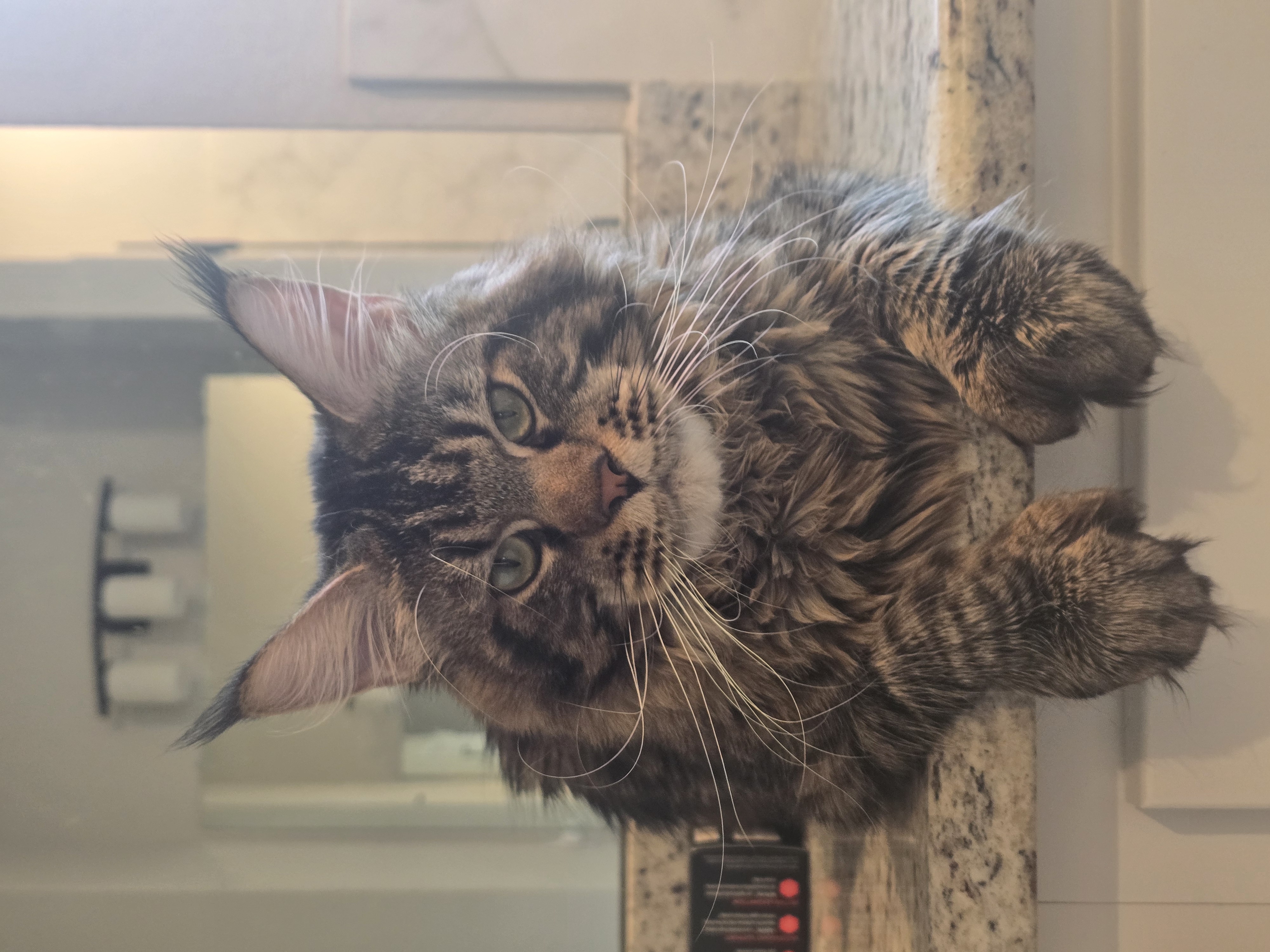
The head is arguably the most important feature in defining breed type. A proper Maine Coon head is a broad, modified wedge — not round like a Persian, not narrow like a Siamese, but somewhere in between with distinct angularity.
Key features of the ideal Maine Coon head include:
- Modified wedge shape: The head is medium in width and slightly longer than it is wide, with a gently curved forehead.
- High cheekbones: Prominent cheekbones give the face structure and contribute to the breed's wild, noble expression.
- Strong, square muzzle: The muzzle is visibly square when viewed from the front and in profile. It should be medium in length and blunt-ended — never pointed or snipey. The muzzle should break distinctly from the cheekbones, creating a noticeable step.
- Firm chin: The chin should be strong and align vertically with the nose and upper lip, completing the square appearance of the muzzle.
- Profile: In profile, the nose shows a gentle concave curve — not a break or a stop, but a smooth, shallow dip.
"The square muzzle is the hallmark of the Maine Coon. It is the single most distinguishing feature of the breed's head type and should never be compromised in a breeding program."
Ears: Large, Tall, and Tufted
Maine Coon ears are one of the breed's most striking features. They should be large, wide at the base, and set high on the head — approximately one ear's width apart. The ears taper to a pointed tip and are well-furnished with hair on the inside.
- Size and placement: Large ears set high and upright give the Maine Coon its alert, attentive expression. Ears that are set too wide or too low on the head detract from the desired look.
- Lynx tips: Tufts of fur extending from the tips of the ears (lynx tips) are highly desired and give the breed its wild, lynx-like appearance. While not all Maine Coons have prominent lynx tips, they are considered a hallmark feature.
- Ear furnishings: Long hair growing from inside the ear helps protect the ear canal and adds to the breed's overall look of ruggedness.
Eyes: Windows to the Wild
The eyes of a Maine Coon are large, expressive, and slightly oblique in set — meaning they are angled gently upward toward the outer base of the ear. This gives the breed a distinctive, slightly wild expression that distinguishes it from breeds with round or almond-shaped eyes.
- Shape: Wide-set and slightly oval, appearing almost round when fully open.
- Color: Green, gold, green-gold, and copper are all accepted. White cats and cats with significant white may have blue eyes or odd eyes (one blue, one gold/green). Eye color should be clear and vivid.
- Expression: The ideal expression is alert, intelligent, and gentle — reflecting the breed's friendly, people-oriented temperament.
Body: Built for Strength and Endurance
The Maine Coon body is long, substantial, and rectangular in shape. This is a working cat built for harsh New England winters, and the body should reflect that rugged heritage. Males are noticeably larger than females, but both sexes should have a muscular, well-proportioned frame.
- Length: The body should be long, creating a rectangular silhouette. A short, cobby body is a significant fault.
- Substance: Maine Coons are heavily boned and muscular. They should feel solid and heavy when lifted, with broad chests and a level back.
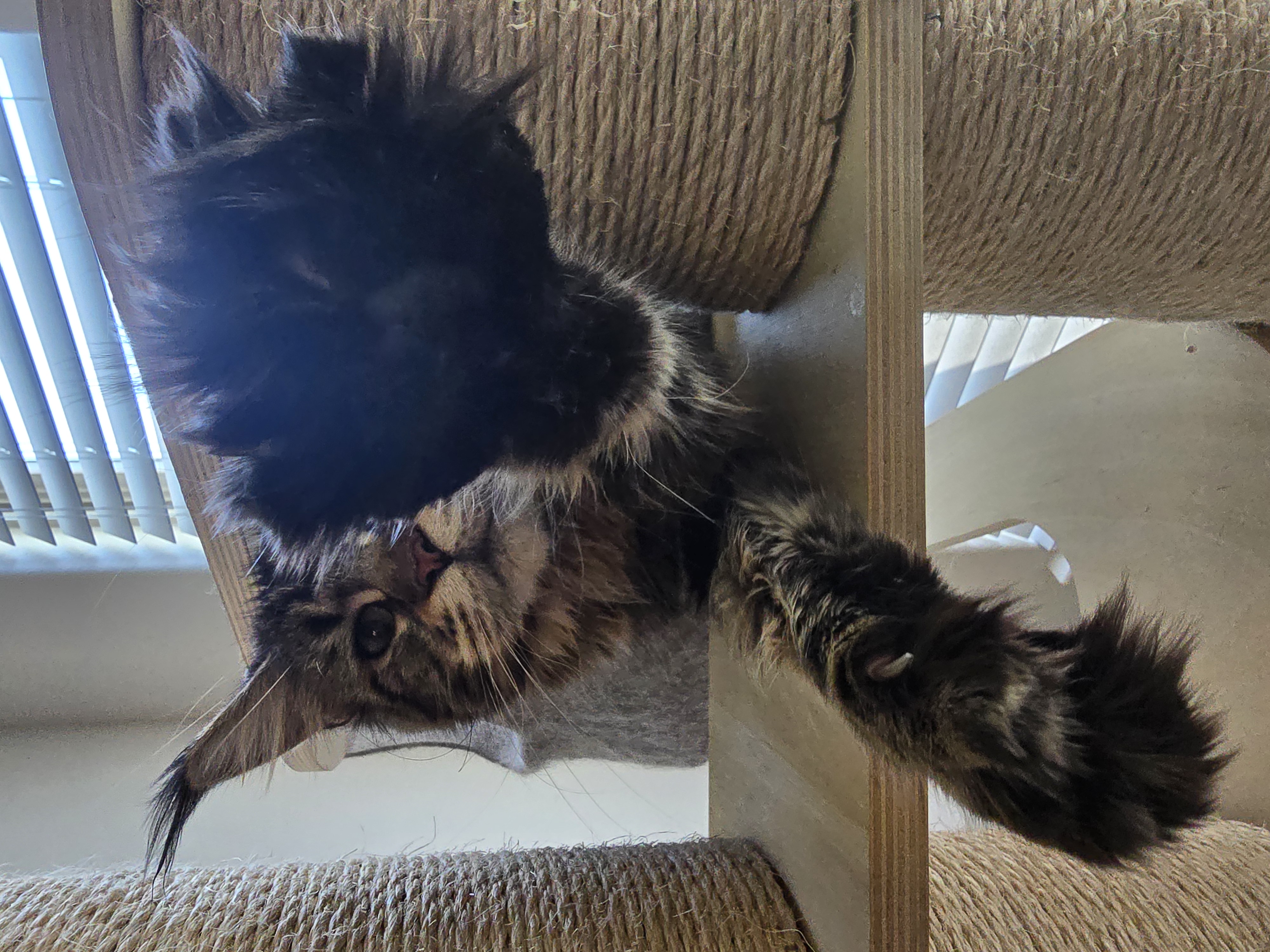
- Legs and paws: Legs are medium length, proportionate to the body, and set wide apart. Paws are large, round, and well-tufted — the breed's natural "snowshoes."
- Size: Males typically weigh 13–18 lbs, with some exceeding 20 lbs. Females range from 8–12 lbs. However, the standard judges proportion and balance, not pounds on a scale.
Coat: A Natural, All-Weather Garment
The Maine Coon coat is semi-long, silky, and uneven in length across the body. This natural variation is a defining feature — not a flaw. The coat should look and feel like it developed to protect the cat in a cold, outdoor environment.
- Shorter on the shoulders: The coat is noticeably shorter on the shoulders and slightly longer as it moves toward the hindquarters.
- Longer on the belly and britches: The fur on the belly, flanks, and back of the legs (britches) is longer and fuller, providing insulation.
- Frontal ruff: A distinctive ruff of longer fur frames the face and chest, giving the Maine Coon a majestic, lion-like appearance.
- Texture: The coat should be silky and smooth with body — not cottony, woolly, or overly plush. A proper Maine Coon coat falls smoothly and has a slight natural oiliness that helps repel water.
- Undercoat: A soft, fine undercoat is present but should not be excessively dense. The coat is seasonal and may vary in thickness throughout the year.
Tail: Long, Flowing, and Magnificent
The tail is one of the Maine Coon's most recognizable features. It should be at least as long as the body — measured from the shoulder blades to the base of the tail. When carried upright or wrapped around the cat's body, a proper tail reaches the cat's shoulder or beyond.
The tail is wide at the base and tapers to a blunt tip, furnished with long, flowing fur that gives it a plume-like appearance. The tail fur should be full but not bushy — flowing and graceful rather than bottle-brushed.
Colors: Almost Anything Goes
One of the wonderful things about the Maine Coon standard is the incredible range of accepted colors and patterns. Both TICA and CFA accept virtually all colors and patterns, with one notable exception:
- Accepted: Tabby (classic, mackerel, ticked), solid, tortoiseshell, bi-color, smoke, silver, shaded, calico, van, and more — with or without white.
- Not accepted: Pointed patterns (colorpoint, mink, sepia) are not permitted, as these are associated with Siamese/Burmese ancestry and are not part of the Maine Coon's natural genetic heritage.
- No preference: No color or pattern is considered superior to another. A solid white Maine Coon is judged on the same structural criteria as a brown classic tabby.
Faults and Disqualifications
Understanding what judges consider faults helps breeders and buyers recognize deviations from the standard. While minor faults may cost points in competition, disqualifications remove a cat from the running entirely.
- Common faults: Delicate bone structure, short cobby body, narrow chest, slanted or almond-shaped eyes, a straight profile without any nose concavity, a pointed or narrow muzzle, uneven bite, or a short tail.
- Serious faults: Crossed eyes, kinked tail, incorrect number of toes (in non-polydactyl classes), poor overall condition.
- Disqualifications: Evidence of hybridization (pointed pattern), temperament issues (aggression toward judges), or any condition that appears to be the result of artificial alteration.
How Standards Preserve Breed Integrity
Breed standards are more than a checklist for show judges — they are the cornerstone of responsible breeding. By consistently selecting breeding cats that meet or exceed the standard, breeders ensure that each generation maintains the traits that define the Maine Coon as a breed.
Without adherence to standards, extreme traits could emerge — overly large ears, excessively long noses, or exaggerated muzzles that push the breed away from its natural, balanced appearance. The standard serves as a guardrail, ensuring that aesthetic preferences don't compromise the breed's health, functionality, or natural beauty.
Whether you're a prospective owner, a breeder, or simply a Maine Coon enthusiast, understanding breed standards gives you a deeper appreciation of what makes these cats truly special. The next time you admire a Maine Coon, look for the square muzzle, the lynx-tipped ears, the flowing tail, and the powerful, rectangular body — and you'll be seeing the breed the way a judge does.