Maine Coon Colors and Patterns: A Complete Visual Guide
A Rainbow of Possibilities
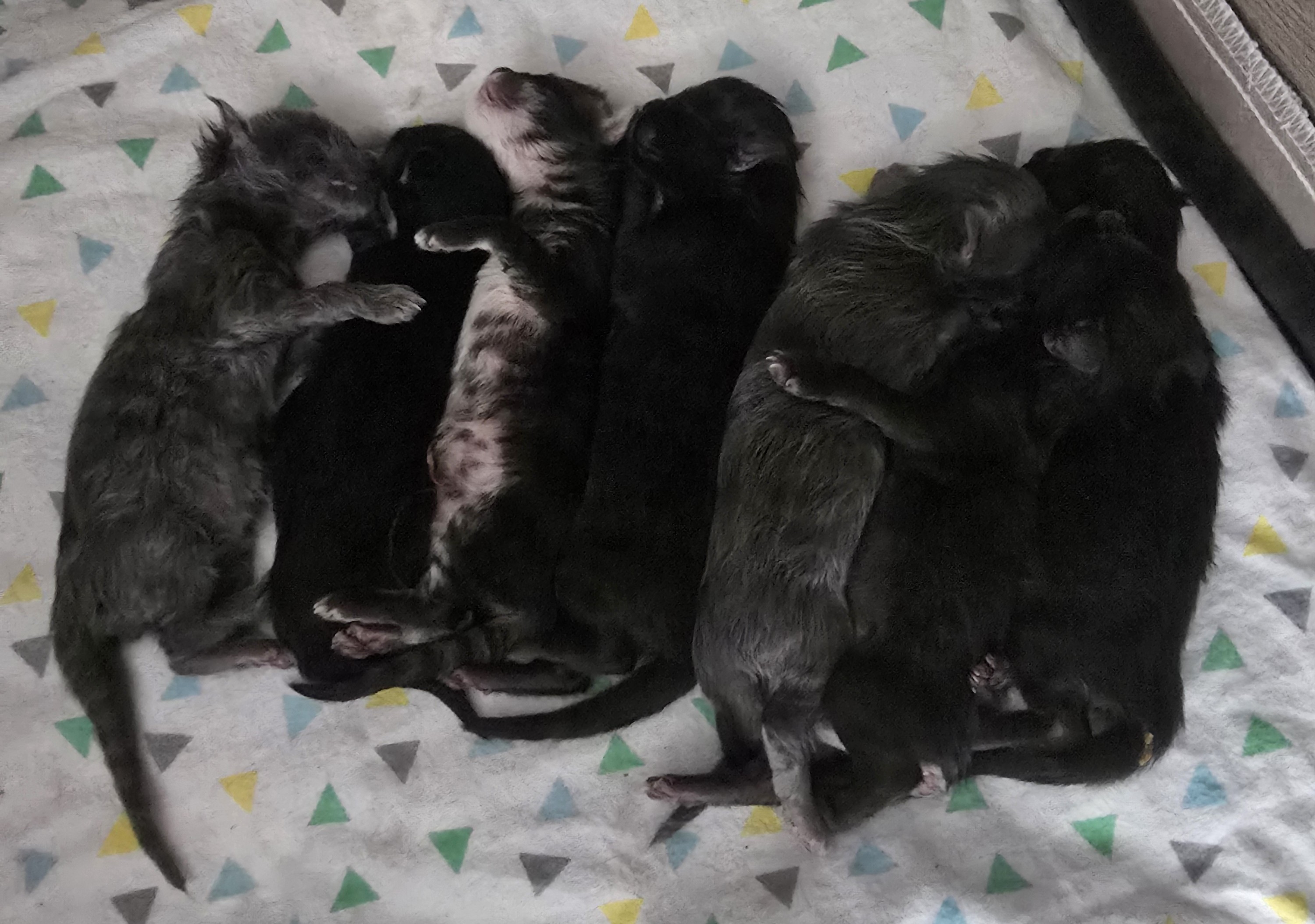
One of the most captivating things about Maine Coons is the extraordinary range of colors and patterns they come in. From the iconic brown classic tabby to ethereal silver smokes and striking solid whites, there's a Maine Coon to suit every aesthetic preference. Understanding the terminology behind these colors and patterns not only deepens your appreciation but also helps you communicate accurately when searching for your perfect kitten.
Both TICA and CFA accept nearly every color and pattern in the Maine Coon — the only exclusion is pointed patterns (colorpoint, mink, sepia), which indicate Siamese or Burmese ancestry. Everything else is fair game, creating one of the most colorful breeds in the cat fancy.
Tabby Patterns: The Breed's Signature Look
Tabby is by far the most common pattern in Maine Coons, and many people picture a brown tabby when they think of the breed. But "tabby" isn't a color — it's a pattern. Tabbies come in multiple variations, each with a distinct look.
Classic (Blotched) Tabby
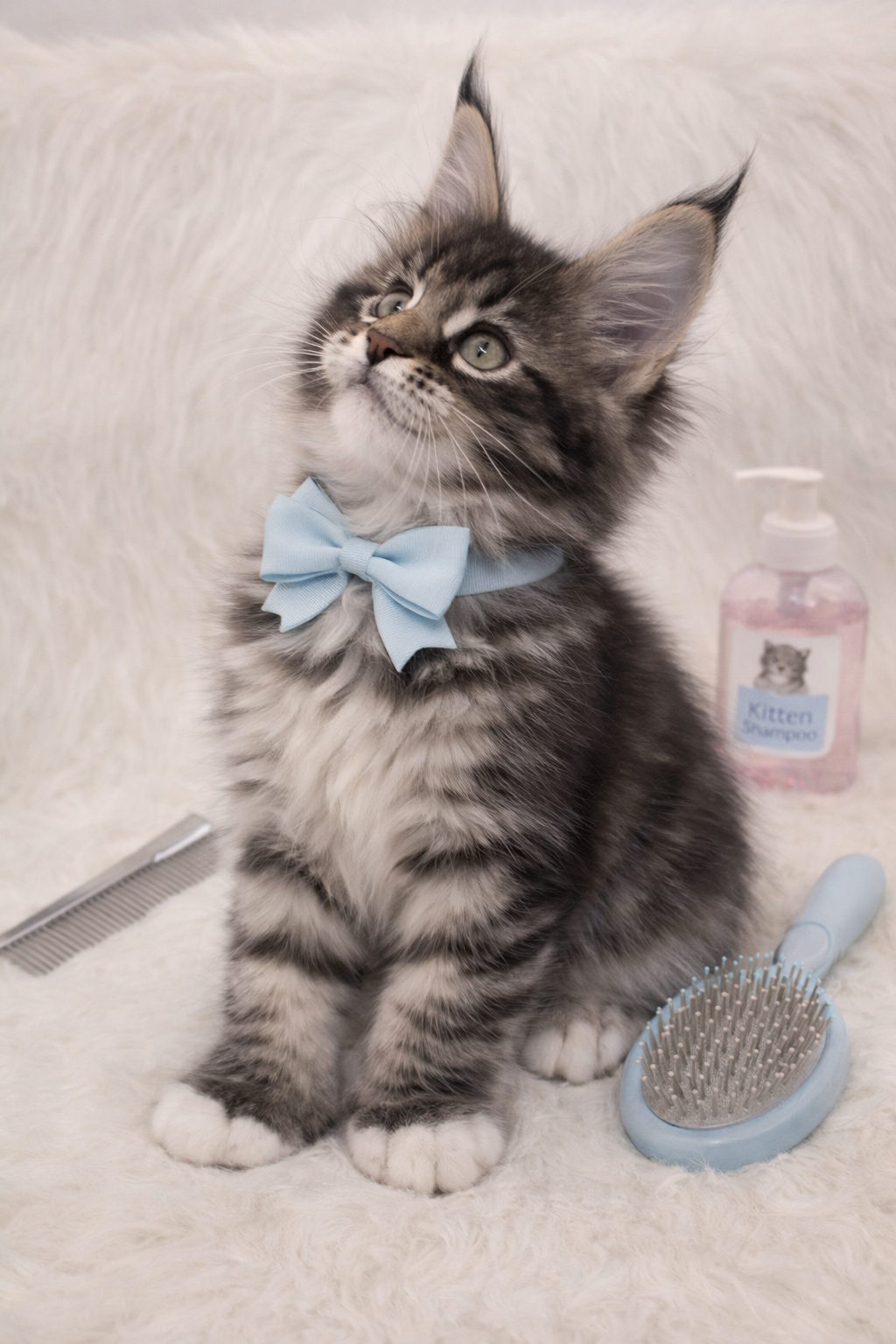
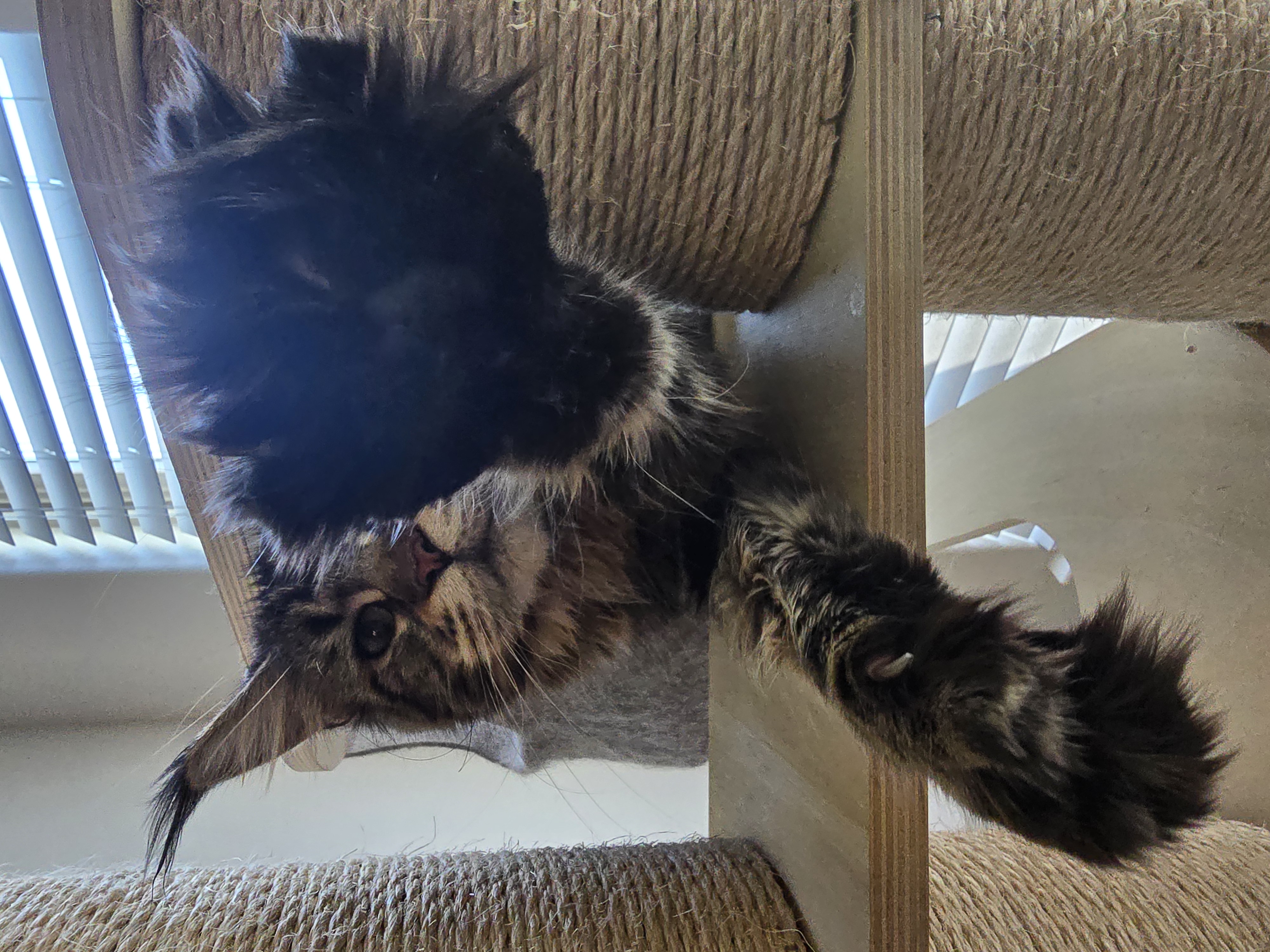
The classic tabby pattern features bold, swirling patterns on the sides of the body, often described as a "bullseye" or "butterfly" shape. The markings are wide, clearly defined, and dramatic. This is the most traditional and recognizable tabby pattern in Maine Coons, and the one most people associate with the breed.
Mackerel Tabby
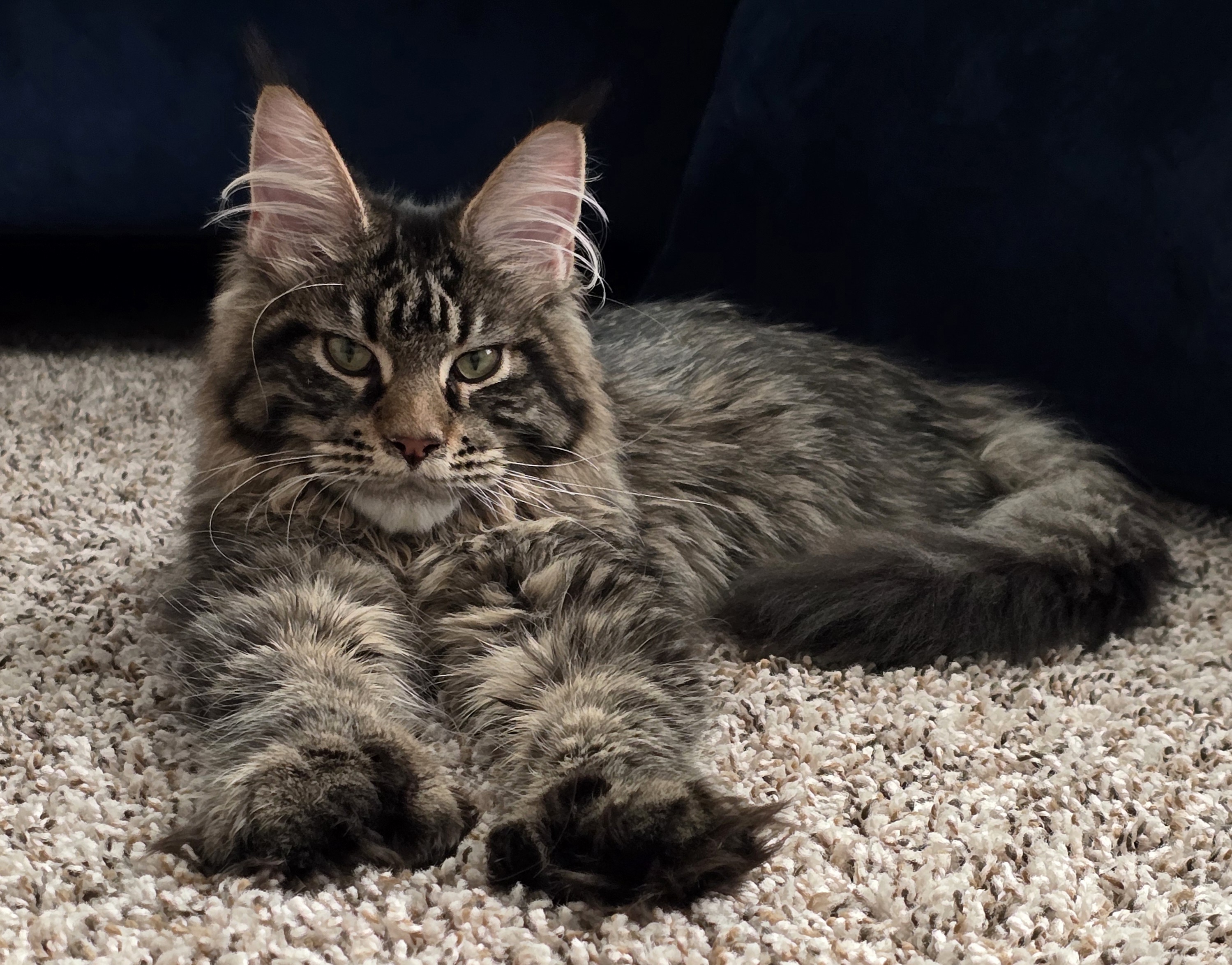
Mackerel tabbies have narrow, parallel stripes running vertically down the sides of the body, resembling a fish skeleton — hence the name. The stripes are evenly spaced and unbroken. While less common than classic tabby in Maine Coons, mackerel tabbies are striking in their clean, linear patterning.
Ticked Tabby
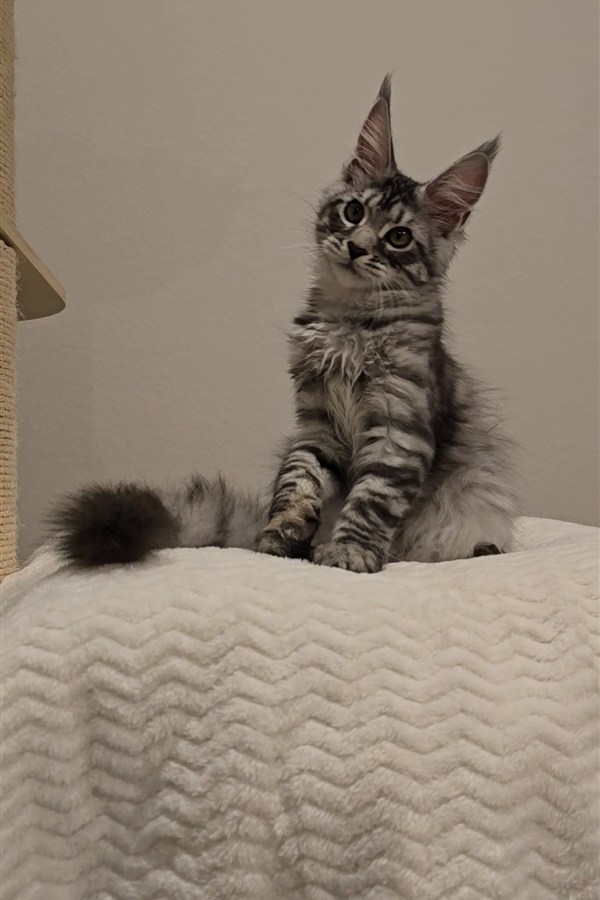
In a ticked tabby, each individual hair is banded with alternating light and dark segments (agouti banding). The body appears to shimmer rather than showing distinct stripes or swirls. Ticked tabbies may still show faint tabby markings on the legs, tail, and face. This pattern is less common in Maine Coons but produces a beautiful, subtly patterned coat.

"All tabby cats carry the same agouti gene — the difference between a classic, mackerel, and ticked tabby is determined by separate modifier genes that dictate how the dark pigment is distributed across the coat."
Solid Colors: Bold and Dramatic
Solid-colored Maine Coons display a single, uniform color from root to tip across the entire body. A true solid has no tabby markings, no white patches, and no variation in shade. Achieving a deep, rich solid color is a goal of many breeding programs.
Black
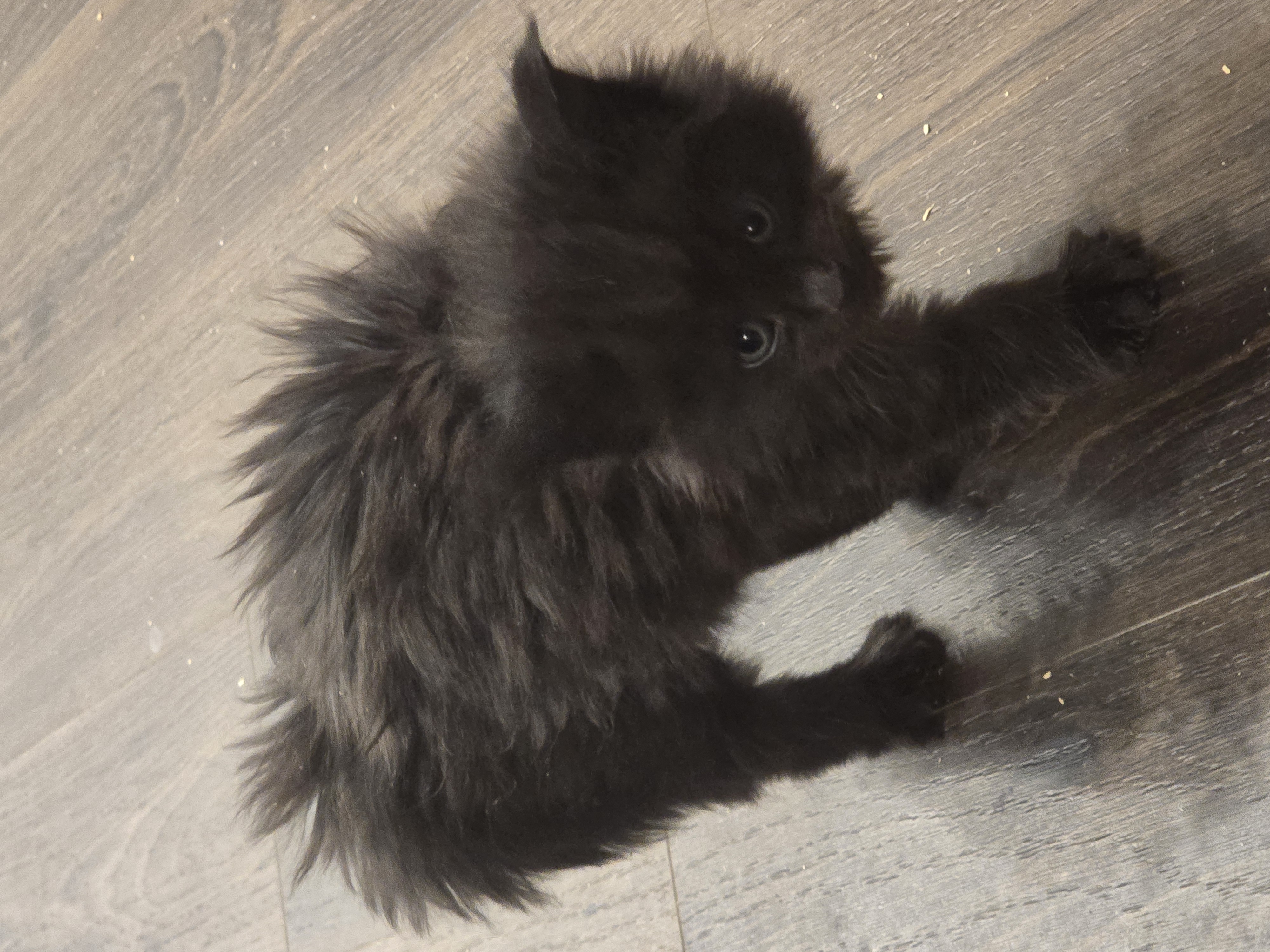
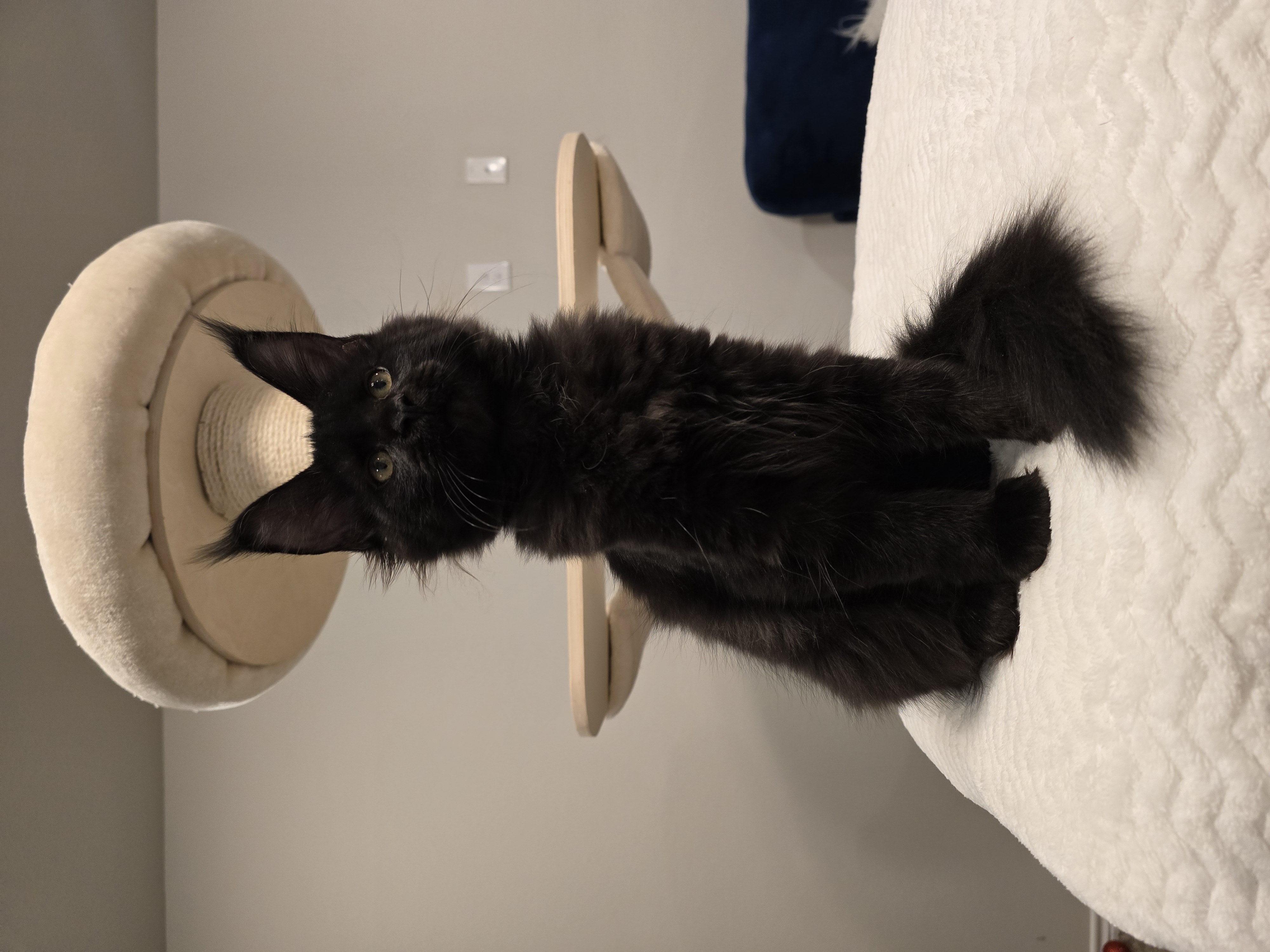
A solid black Maine Coon is a stunning sight — sleek, glossy, and dramatic. The color should be dense coal black from root to tip, with no rusty undertones. In sunlight, some blacks may show faint "ghost" tabby markings, especially as kittens, but these should not be visible in adults.
White
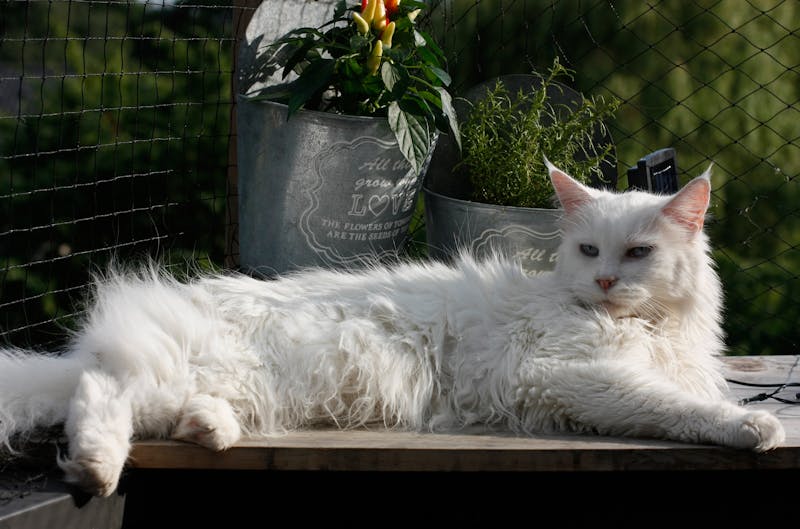
Solid white Maine Coons are elegant and eye-catching. They may have blue, gold, green, or odd eyes (one blue, one gold/green). White is actually a masking gene — a white cat may carry any color genetically beneath its white coat, which can make breeding programs interesting.
Red (Orange)
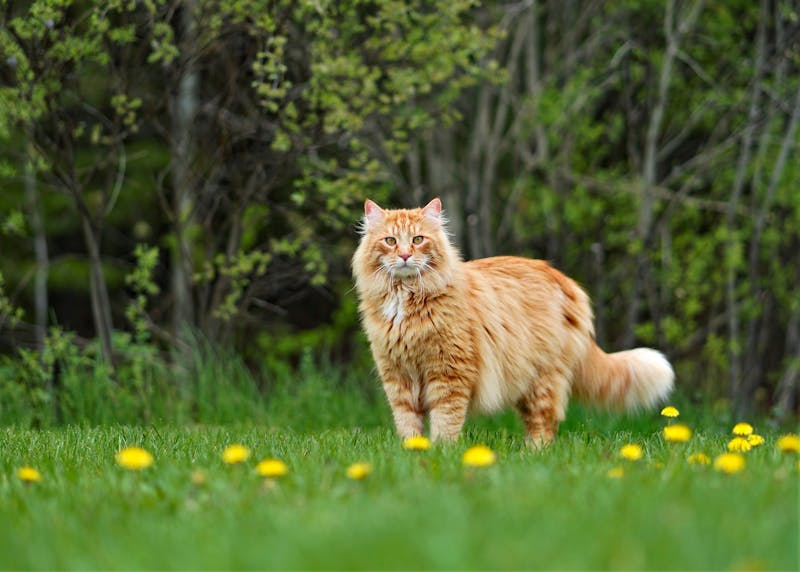
Red cats are always tabby to some extent — the tabby pattern cannot be fully suppressed in red/orange cats. However, some reds have such faint markings that they appear nearly solid. The color ranges from deep, rich ginger to lighter cream-orange tones.
Blue
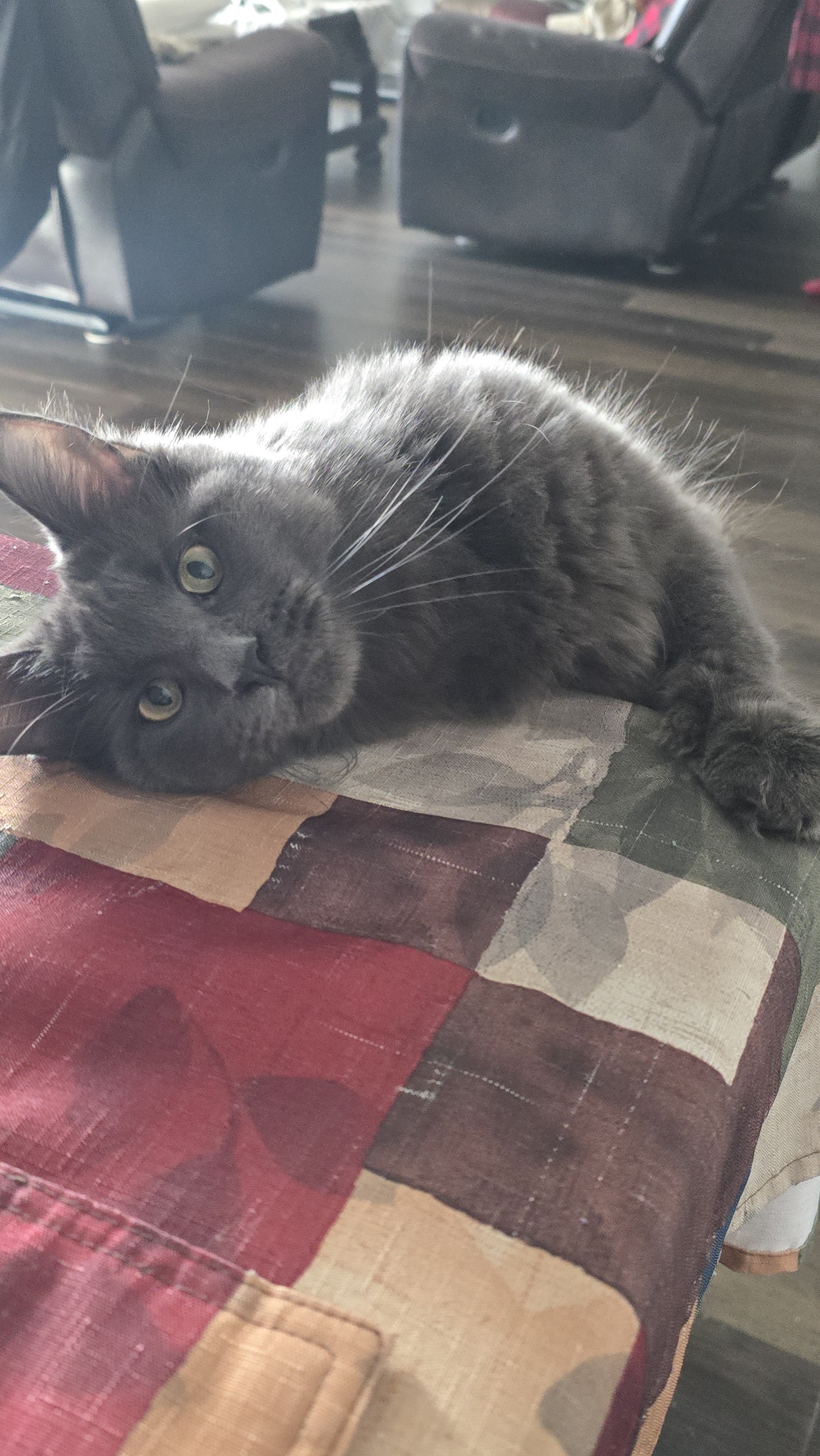
Blue is the dilute form of black, producing a soft, slate-gray color. A good blue is even in tone throughout, with no brownish or silvery casts. Blue Maine Coons have a quiet elegance that many people find irresistible.
Cream
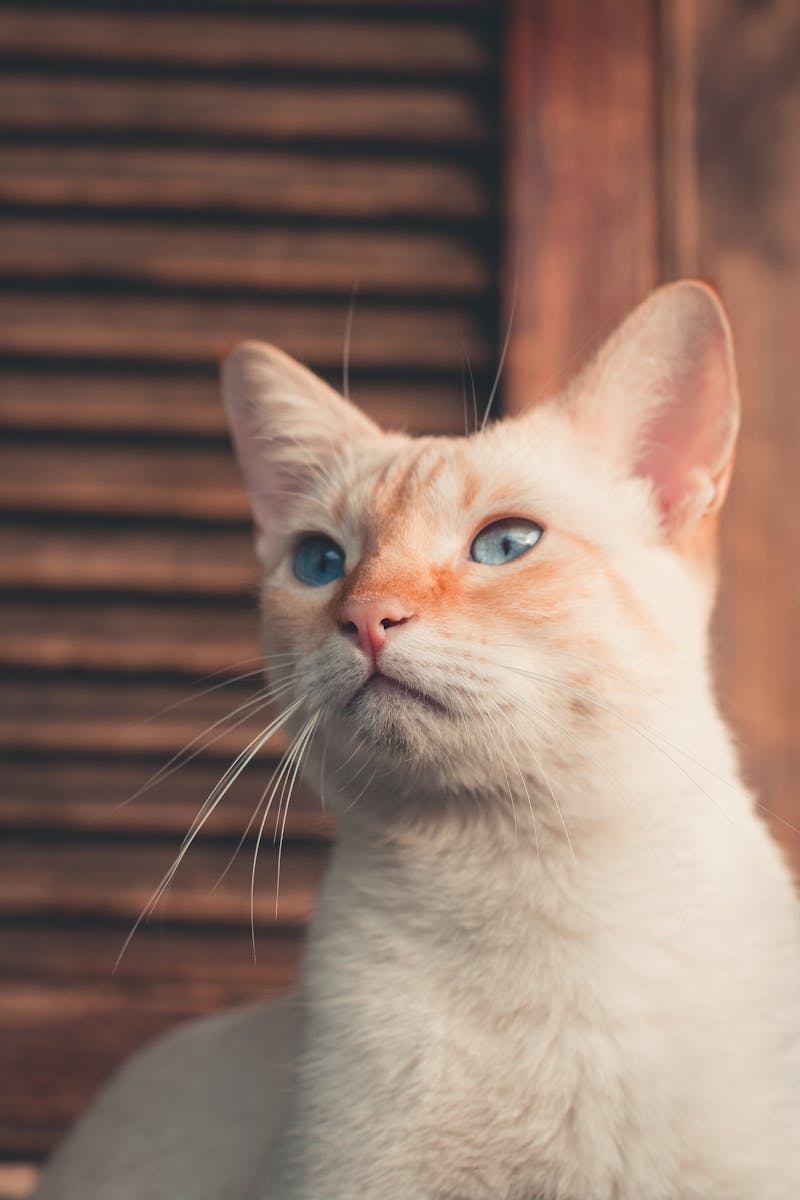
Cream is the dilute form of red, resulting in a soft, warm, buff-toned coat. Like red, cream cats will always show some degree of tabby patterning, though it may be very faint in well-bred creams.
Tortoiseshell and Calico: Patchwork Beauty
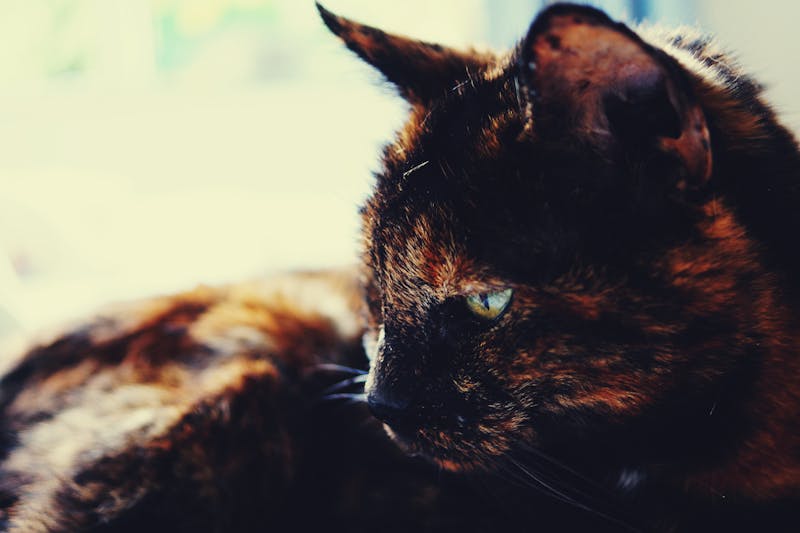
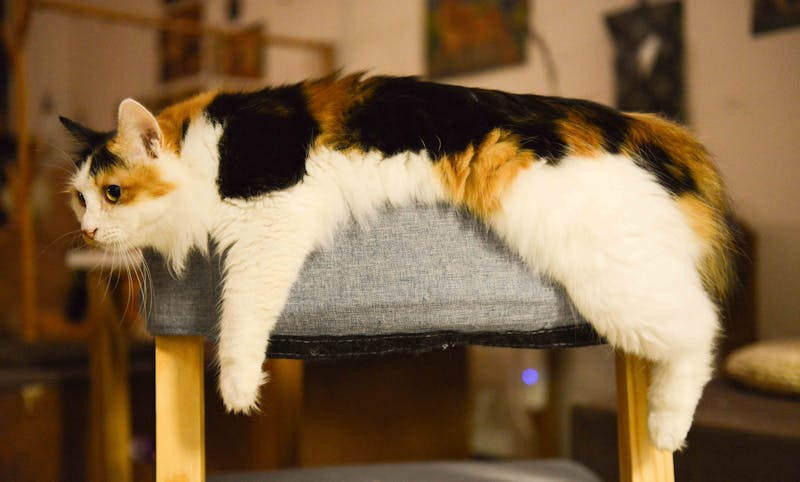
Tortoiseshell (tortie) cats display a mosaic of two colors — typically black and red (or their dilute counterparts, blue and cream). The colors are intermingled throughout the coat in a random, patchy pattern. No two torties are ever alike.
- Tortoiseshell: Black and red patches intermixed throughout the coat. May also include brown tabby and red tabby patches (called "torbie" or "patched tabby").
- Dilute tortoiseshell: Blue and cream patches — softer, more muted, and equally beautiful.
- Calico: A tortoiseshell with significant white areas. In a true calico, the colored patches are distinct and well-defined against the white background.
- Dilute calico: Blue, cream, and white — one of the softest, most pastel combinations you'll find in any cat breed.
Because tortoiseshell coloring is linked to the X chromosome, torties and calicos are almost exclusively female. A male tortoiseshell is extremely rare (approximately 1 in 3,000) and is typically sterile.
Silver and Smoke: The Inhibitor Gene at Work
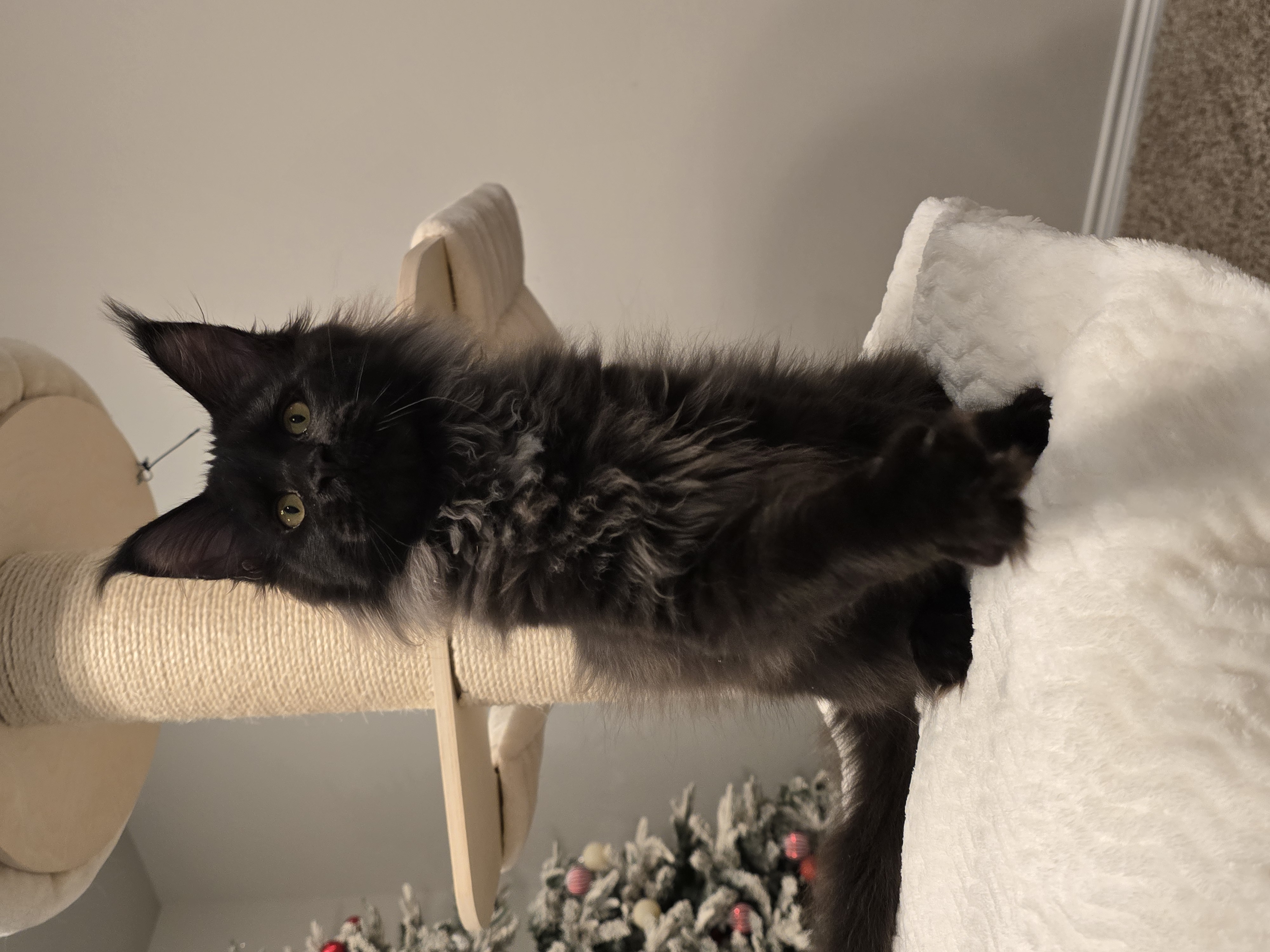
Silver and smoke colors are produced by the inhibitor gene (symbolized as "I"), which suppresses pigment in the base of each hair shaft, leaving it white or pale while the tip retains color. The visual effect is dramatic and ethereal.
Smoke
A smoke Maine Coon appears to be a solid color at first glance, but when the coat is parted or the cat moves, a brilliant white undercoat is revealed. The effect is stunning — like a cat wrapped in colored mist. Smoke colors include black smoke, blue smoke, red smoke (cameo), and cream smoke.
Silver Tabby
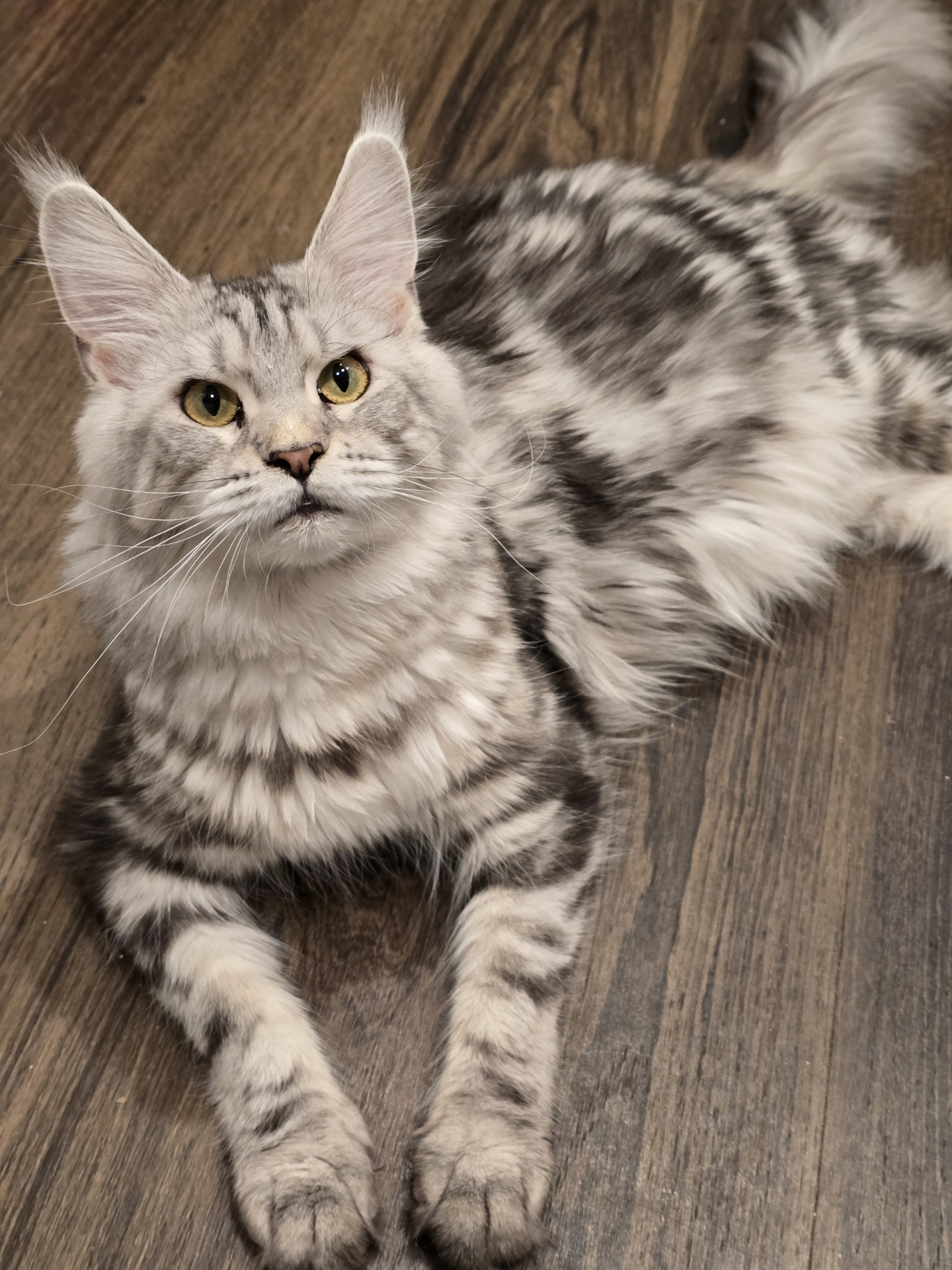
In silver tabbies, the inhibitor gene brightens the ground color of the tabby pattern to a sparkling silver-white, while the tabby markings remain dark. Silver classic tabbies and silver mackerel tabbies are some of the most sought-after Maine Coon colors, with their dramatic contrast and luminous coats.
Shaded and Chinchilla
Shaded cats have color on the outer tips of their fur (about one-third of the hair shaft), with the rest being white. Chinchilla cats have even less tipping — just the very tips are colored, creating a sparkling, ethereal appearance. These are produced by the same inhibitor gene in combination with the wide-band gene.
Bi-Color, Van, and With-White Patterns
White spotting adds another layer of variety to Maine Coon colors. The white spotting gene determines how much white appears on the coat and where it's placed.
- With white (bi-color): Any color or pattern combined with white areas. The amount of white can vary from a small locket or mittens to large, even patches covering most of the body.
- Van pattern: The cat is predominantly white with color restricted to the head and tail (and sometimes a few small body spots). Van-patterned Maine Coons are striking and dramatic.
- Tuxedo: Black and white, typically with a white chest, belly, and paws — resembling a formal tuxedo. Not an official pattern name in registries, but a popular term among owners.
- Harlequin: Mostly white with several large patches of color scattered across the body. Falls between bi-color and van on the white-spotting spectrum.
Most Common vs. Rare Colors
Some colors are seen frequently in Maine Coons, while others are prized for their rarity. Here's a general breakdown:
- Most common: Brown classic tabby, brown mackerel tabby, black, red tabby, and brown tabby with white. These are the colors most people picture when they think "Maine Coon."
- Moderately common: Blue, cream, tortoiseshell, blue tabby, silver tabby, smoke.
- Less common: Solid white, solid red, chinchilla silver, shaded, blue smoke, dilute calico.
- Rare: Ticked tabby patterns, chocolate, lilac (these last two are controversial and not accepted by all registries in Maine Coons).
Color Genetics Basics
Understanding a few genetic principles helps demystify how Maine Coon colors work:
- Two base colors: All cat colors derive from just two pigments — black (eumelanin) and red (phaeomelanin). Every other color is a modification of these two.
- Dilution gene (d): When present in double dose (dd), this gene lightens black to blue and red to cream.
- Agouti gene (A): Determines whether the tabby pattern is visible. Agouti (A-) allows tabby markings; non-agouti (aa) produces a solid coat.
- Inhibitor gene (I): Suppresses pigment at the hair base, producing silver and smoke colors.
- White spotting gene (S): Produces white patches on the coat. The amount of white varies depending on whether the cat carries one or two copies and other modifying factors.
- Dominant white gene (W): Masks all other color genes, producing a solid white cat regardless of its underlying genotype.
How Color Develops as Kittens Mature
Maine Coon kittens often look quite different from their adult selves. Color and pattern can change significantly during the first year or two of life:
- Smoke kittens are often born looking solid-colored and develop their silver undercoat gradually over several weeks.
- Silver tabbies may appear brownish as kittens and brighten to true silver as their adult coat comes in.
- Black kittens may show rusty or brownish tones during their kitten coat phase, especially if exposed to sunlight, but darken to true black with their adult coat.
- Tabby markings can become more defined or slightly softer as the coat lengthens and matures.
- Eye color in kittens starts as blue and gradually changes to its adult color (green, gold, or copper) by 3–6 months of age.
Patience is key — it can take up to two years for a Maine Coon's coat to reach its full length, density, and final color. The cat you bring home as a kitten may look remarkably different by the time it reaches maturity, often becoming even more beautiful with time.