How Big Do Maine Coons Really Get?
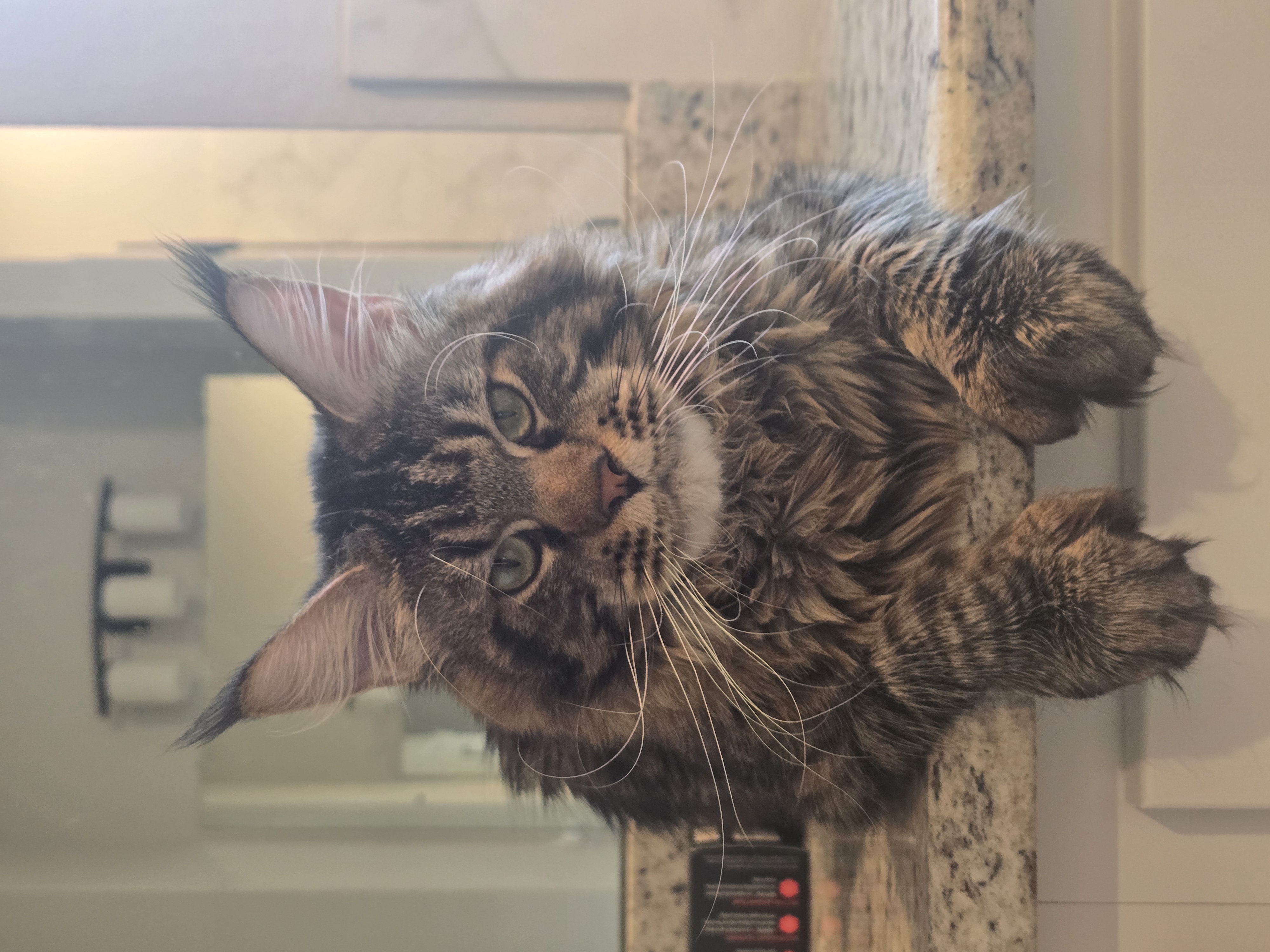
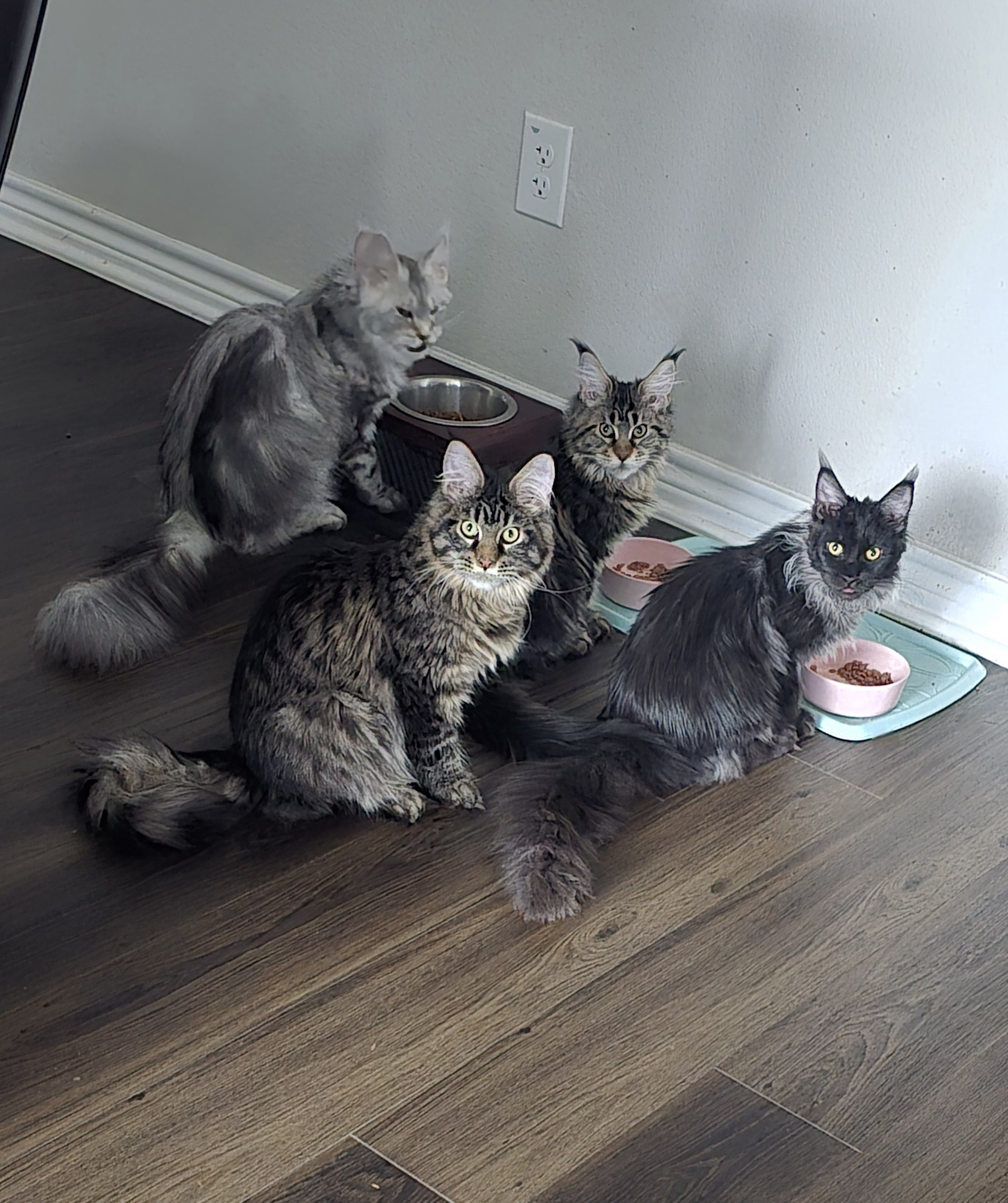
If you've spent any time browsing cat content online, you've probably seen photos of Maine Coons that look like they belong in the wild — enormous, majestic, and seemingly the size of a medium dog. But how big do Maine Coons actually get? The internet loves to exaggerate, and while Maine Coons are undeniably the largest domesticated cat breed, the reality is both more nuanced and more interesting than viral photos suggest.
Average Size Ranges
Maine Coons are a large breed, but "large" covers a surprisingly wide range. Here's what you can realistically expect:
- Males: Typically weigh between 15–25 pounds, with most falling in the 18–22 pound range. Body length (nose to tail tip) can reach 38–40 inches. Height at the shoulder is usually 10–16 inches.
- Females: Generally weigh between 10–18 pounds, with most in the 12–15 pound range. They're noticeably smaller than males but still significantly larger than the average domestic cat.
- Body length: Maine Coons are long-bodied cats. Including the tail, which can be 12–18 inches on its own, total length of 36–40 inches is common for males.
It's worth noting that a healthy 18-pound Maine Coon is an impressively large cat. Not every male will hit 25 pounds, and a cat that does should be carrying that weight in muscle and frame — not fat.
The Slow Growth Timeline
One of the most distinctive things about Maine Coons is how slowly they mature. While most domestic cats reach their full size by 1–2 years of age, Maine Coons continue growing until they're 3–5 years old. This extended growth period is part of what makes the breed so unique.
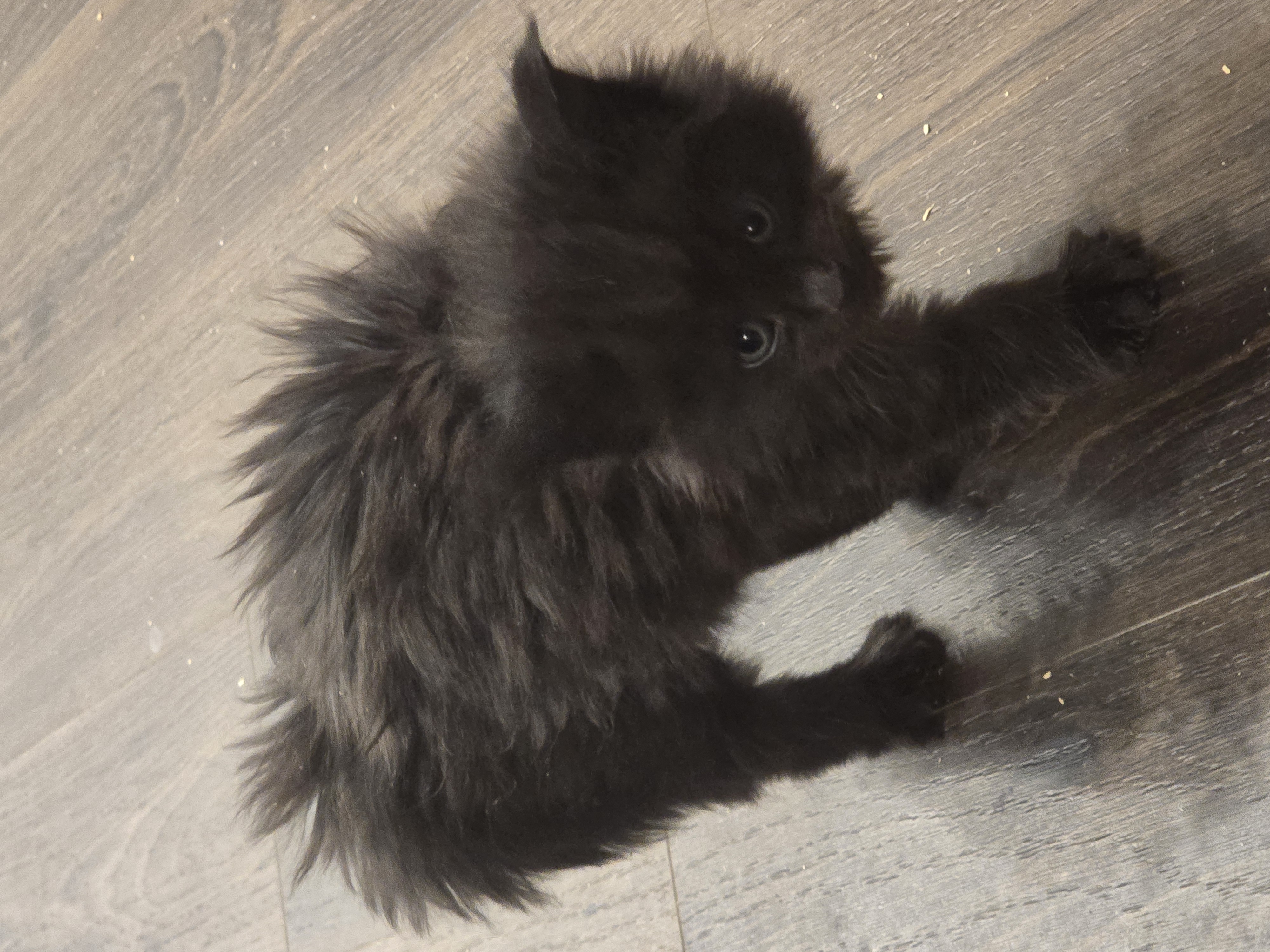
- Birth to 3 months: Maine Coon kittens are often larger than other breed kittens at birth (around 115–170 grams). They grow rapidly, roughly doubling their weight every few weeks.
- 3–6 months: Growth continues at a steady pace. By 6 months, a male kitten may already weigh 8–10 pounds.
- 6–12 months: Growth rate begins to slow slightly, but they're still filling out. A 12-month-old male might weigh 12–15 pounds — and he's not even close to done.
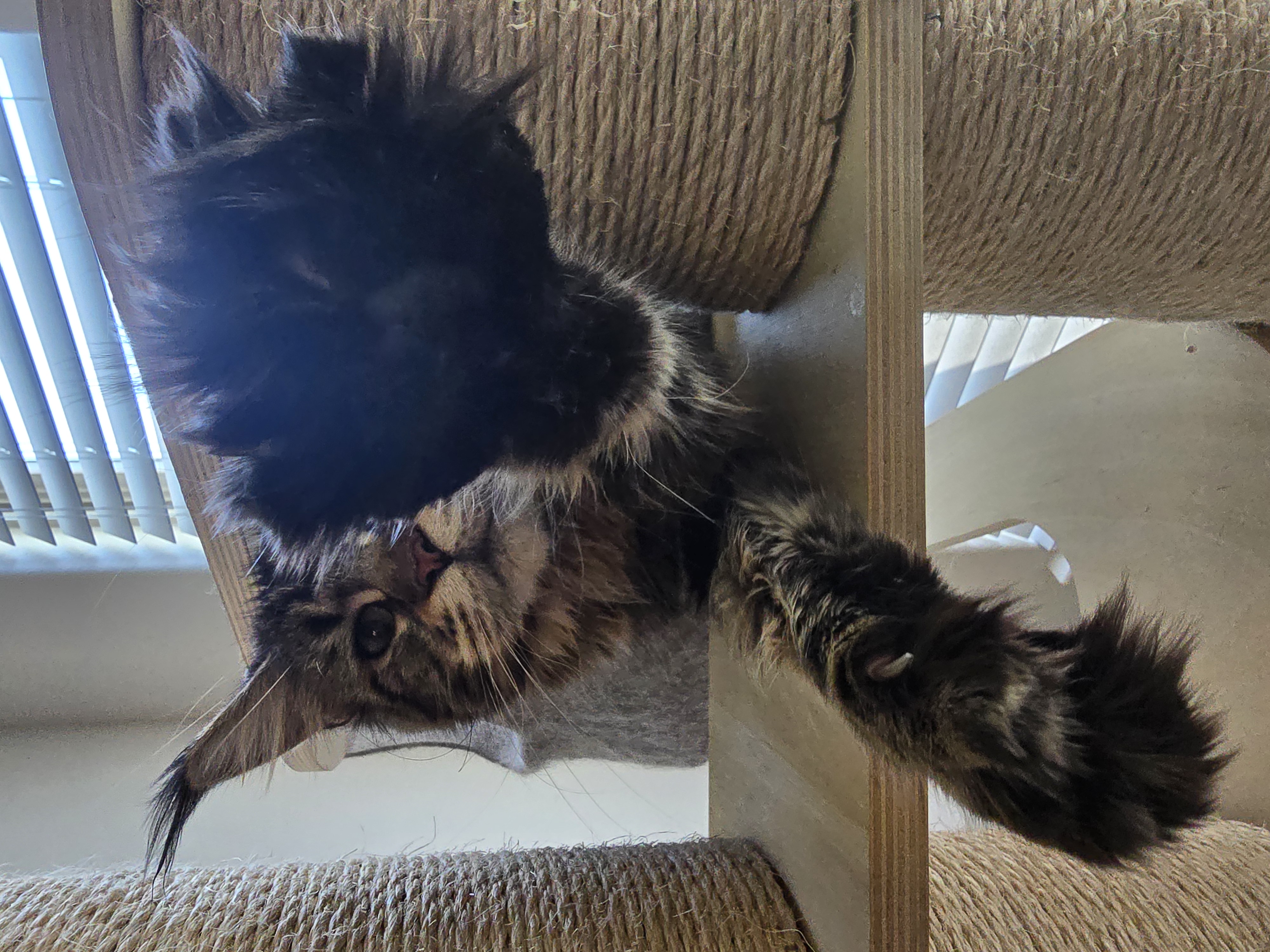
- 1–3 years: Growth continues but becomes more gradual. Bone structure reaches full development, and muscle mass increases. The ruff, ear tufts, and tail plume continue to fill in.
- 3–5 years: Final filling out occurs. Chest broadens, the coat reaches full density, and the cat achieves their mature adult size and presence.
Maine Coon Weight Chart: Males vs. Females
The table below provides typical weight ranges for Maine Coons from birth through full maturity. Keep in mind that individual cats may fall outside these ranges depending on genetics, nutrition, and overall health.
| Age | Males | Females |
|---|---|---|
| 1 Week | 7 – 10 oz | 6 – 9 oz |
| 2 Weeks | 10 – 14 oz | 8 – 12 oz |
| 3 Weeks | 14 – 18 oz | 12 – 16 oz |
| 4 Weeks | 1.0 – 1.5 lbs | 0.8 – 1.3 lbs |
| 5 Weeks | 1.3 – 1.8 lbs | 1.0 – 1.5 lbs |
| 6 Weeks | 1.5 – 2.2 lbs | 1.2 – 1.8 lbs |
| 7 Weeks | 1.8 – 2.5 lbs | 1.5 – 2.1 lbs |
| 8 Weeks | 2.0 – 3.0 lbs | 1.8 – 2.5 lbs |
| 9 Weeks | 2.3 – 3.3 lbs | 2.0 – 2.8 lbs |
| 10 Weeks | 2.5 – 3.8 lbs | 2.2 – 3.2 lbs |
| 11 Weeks | 2.8 – 4.2 lbs | 2.5 – 3.5 lbs |
| 12 Weeks | 3.0 – 4.5 lbs | 2.8 – 4.0 lbs |
| 13 Weeks | 3.5 – 5.0 lbs | 3.0 – 4.3 lbs |
| 14 Weeks | 3.8 – 5.5 lbs | 3.3 – 4.6 lbs |
| 15 Weeks | 4.0 – 5.8 lbs | 3.5 – 5.0 lbs |
| 16 Weeks | 4.5 – 6.5 lbs | 3.8 – 5.5 lbs |
| 5 Months | 6 – 9 lbs | 5 – 7 lbs |
| 6 Months | 8 – 12 lbs | 6 – 9 lbs |
| 1 Year | 12 – 18 lbs | 8 – 13 lbs |
| 4 Years (Full Size) | 15 – 25 lbs | 10 – 18 lbs |
Note: Weights are approximate and represent typical ranges. Polydactyl Maine Coons may weigh slightly more due to additional bone structure in their paws. Always consult your veterinarian if you have concerns about your kitten's growth rate.
This means if you adopt a Maine Coon kitten, you'll be watching them grow and change for years — which is part of the fun of the breed.
Factors That Affect Size
Not all Maine Coons are created equal when it comes to size. Several factors influence how large an individual cat will grow:
- Genetics: This is the biggest factor. Cats from lines bred for size will generally produce larger offspring. If you want an idea of how large a kitten will get, look at the parents — and even the grandparents. Pedigree lines from European bloodlines tend to be larger on average than some American lines, though this is a generalization with many exceptions.
- Nutrition: A well-nourished kitten with access to high-quality, protein-rich food during their extended growth phase will reach their full genetic potential. Malnutrition during development can permanently stunt growth.
- Sex: Males are consistently larger than females, often by 30–50%. If size is a priority, a male is more likely to deliver that "wow factor."
- Neutering/spaying timing: Cats neutered or spayed before their growth plates close (which happens later in Maine Coons) may actually grow slightly taller due to delayed bone plate closure. However, they may also carry weight differently and be more prone to obesity.
- Overall health: Kittens who experience significant illness during their growth phase may not reach their full size potential.
"Don't choose a Maine Coon solely for size — fall in love with the breed for their personality, intelligence, and companionship. The size is just a spectacular bonus."
Internet Myths vs. Reality
Social media has created some wildly unrealistic expectations about Maine Coon size. Let's address the most common myths:
Myth: Maine Coons regularly weigh 30–35 pounds.
Reality: A 30-pound Maine Coon is extremely rare and, in
most cases, would be considered overweight. Cats at that weight
are typically obese, not simply "large." The world record holders
are exceptional outliers, not the breed standard.
Myth: Forced perspective photos show their true size.
Reality: Many viral Maine Coon photos use forced
perspective — holding the cat at arm's length toward the camera —
which dramatically exaggerates their apparent size. A 20-pound cat
held this way can look like it weighs 40 pounds.
Myth: A Maine Coon kitten will grow into a "mini lion."
Reality: While Maine Coons are substantial cats with an
impressive presence, they are still domestic cats. They're more
comparable in size to a small-to-medium dog like a Corgi or a
Dachshund — not a wild cat or a Labrador.
Myth: Bigger is always better.
Reality:
Breeding exclusively for extreme size can compromise health. Very
large cats are more prone to joint problems, heart issues, and
reduced lifespan. A well-proportioned, healthy Maine Coon in the
typical weight range is far more desirable than an unhealthily
oversized one.
Comparison to Other Large Breeds
Maine Coons are the largest domesticated cat breed, but they're not the only big cats out there. Here's how they compare:
- Norwegian Forest Cat: Often confused with Maine Coons, Wegies are also large and long-haired. Males typically weigh 12–16 pounds. They're slightly smaller on average, with a different face shape (more triangular) and a more uniform coat length.
- Ragdoll: Males typically weigh 15–20 pounds. Similar in weight to Maine Coons, but Ragdolls tend to be less muscular and more "floppy" in build. Their coat is also different — silkier and without the Maine Coon's water-resistant quality.
- Savannah Cat: F1 and F2 Savannahs can weigh 12–25 pounds, but they're taller and leaner than Maine Coons — more like a wild cat in build. They're also a hybrid breed with very different care requirements.
- British Shorthair: Males can reach 12–18 pounds. They're compact and stocky rather than long like Maine Coons, so they look quite different despite overlapping weight ranges.
What sets the Maine Coon apart isn't just weight — it's the overall package. Their length, bushy tail, ear tufts, prominent ruff, and muscular build give them a visual presence that exceeds their numbers on the scale.
When to Be Concerned About Weight
Because Maine Coons are supposed to be big, it can be difficult to know when "big" crosses the line into "overweight." Here are some guidelines:
- You should be able to feel your cat's ribs with light pressure — if you have to press hard through a layer of fat, your cat may be overweight
- Viewed from above, your cat should have a visible waist (a slight narrowing) behind the ribs
- From the side, the belly should tuck up slightly rather than hanging down
- Your cat should be able to groom all parts of their body without difficulty
- Activity level matters — a lethargic, overweight Maine Coon is at higher risk for diabetes, joint problems, and heart disease
If you're unsure whether your Maine Coon is at a healthy weight, ask your veterinarian. They can assess body condition score and recommend appropriate calorie intake. Remember — a lean, muscular 18-pound Maine Coon is healthier than a soft, overweight 25-pound one.
Maine Coons are genuinely impressive cats, and their size is a wonderful part of the breed's appeal. But the best Maine Coons aren't defined by the number on the scale — they're defined by their health, their personalities, and the joy they bring to their families. Whether your Maine Coon ends up on the larger or smaller side of the spectrum, you'll have an extraordinary companion.