The History of Maine Coons: America's First Show Cat
The Maine Coon is more than just a beautiful cat — it's a living piece of American history. As one of the oldest natural breeds in North America, the Maine Coon's story stretches back centuries, winding through folklore, farm life, competitive cat shows, near extinction, and a triumphant comeback. Understanding where this remarkable breed came from makes owning one even more meaningful.
Origin Theories: Folklore and Fact
The true origins of the Maine Coon are shrouded in mystery, and over the centuries, several colorful theories have emerged to explain how these large, long-haired cats came to inhabit the state of Maine.
- The seafaring cat theory: The most widely accepted explanation is that Maine Coons descended from long-haired cats brought to New England by European sailors — English, Scandinavian, or possibly Viking seafarers — who carried cats aboard their ships to control rodents. These cats bred with local short-haired domestic cats, and over generations, natural selection in Maine's harsh climate produced the large, hardy, thick-coated breed we know today.
- The Marie Antoinette theory: One romantic legend claims that when Marie Antoinette was planning her escape from France during the French Revolution, she loaded her most prized possessions — including six of her beloved long-haired Turkish Angora cats — onto a ship bound for America. The queen never made it, but her cats supposedly arrived in Wiscasset, Maine, where they bred with local cats and gave rise to the Maine Coon breed.
- The Captain Coon theory: Another tale attributes the breed to an English sea captain named Charles Coon, who sailed the New England coast with long-haired cats aboard his ship. When the ship docked, his cats would go ashore and mate with local felines. Long-haired kittens that appeared in port towns became known as "Coon's cats."
- The raccoon myth: Perhaps the most entertaining — and biologically impossible — theory suggests that Maine Coons are the offspring of semi-wild domestic cats who mated with raccoons, explaining both their bushy tails and their name. While genetically impossible (cats and raccoons cannot interbreed), this myth has persisted for well over a century.
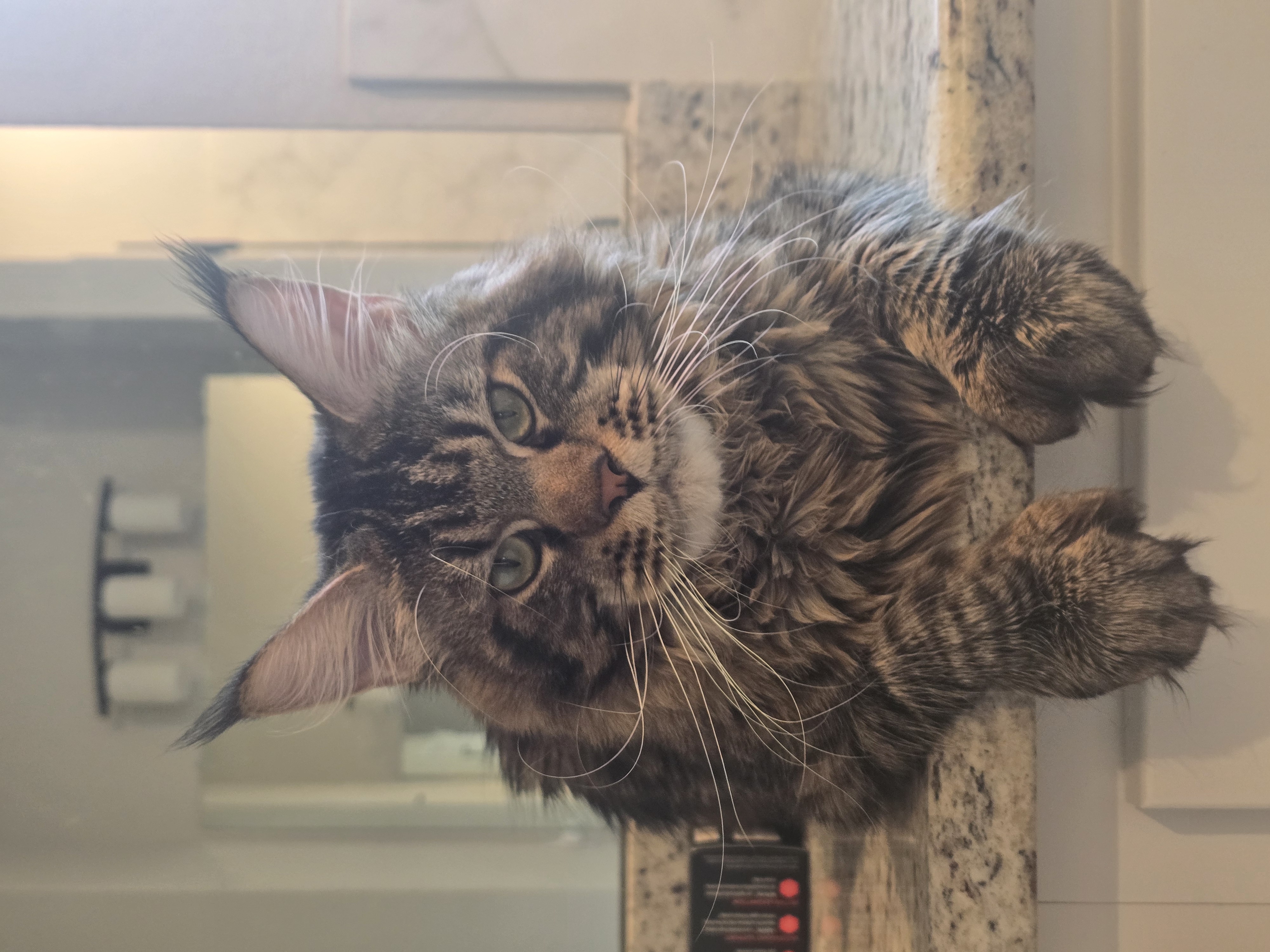
The most likely explanation combines elements of the seafaring theory with natural selection. Long-haired cats from Europe interbred with existing American cats, and Maine's cold winters, deep snow, and rugged terrain naturally selected for the traits we associate with Maine Coons today: large size, thick water-resistant coats, tufted paws that act as snowshoes, and bushy tails that can be wrapped around the body for warmth.
Working Cats of New England
Before they were show cats or beloved companions, Maine Coons were working cats. Throughout the 18th and 19th centuries, they were prized on New England farms and homesteads for their exceptional mousing abilities. Their large size, intelligence, and rugged constitution made them invaluable rat and mouse catchers in barns, farmhouses, and aboard ships.
Maine Coons earned a reputation as hardy, adaptable, and friendly — they were sociable with families but independent enough to patrol barns and fields. This combination of utility and companionship made them the most popular cat in rural Maine, and they became so identified with the state that they were eventually designated the official state cat of Maine in 1985.
The First Cat Shows: Cosey Makes History
The Maine Coon's transition from farmyard mouser to show ring star began in the late 19th century. Local farmers and cat fanciers in New England began holding informal competitions — sometimes called "Maine State Champion Coon Cat" contests — at the Skowhegan Fair, where the biggest and most beautiful cats would compete.
But the Maine Coon's greatest early triumph came on May 8, 1895, at the first major cat show held in North America at Madison Square Garden in New York City. A brown tabby Maine Coon named Cosey, owned by Mrs. E. N. Barker, was awarded the silver collar and medal for Best in Show — making the Maine Coon quite literally America's first show cat champion.
"Cosey's Best in Show win at Madison Square Garden in 1895 was not just a triumph for one cat — it put the Maine Coon on the national stage and established the breed as a serious competitor in the emerging world of cat fancy."
Cosey's silver collar is now preserved in the Cat Fanciers' Association (CFA) headquarters, a tangible reminder of the Maine Coon's early glory days. For the next several years, Maine Coons were popular entries and frequent winners at cat shows throughout the northeastern United States.
Near Extinction: The Dark Decades
The Maine Coon's fortunes took a dramatic downturn in the early 1900s. The arrival of exotic, glamorous breeds from overseas — particularly the Persian and the Siamese — captured the fancy of American cat enthusiasts. These sleek, unusual-looking imports made the familiar, homegrown Maine Coon seem plain by comparison.
By the 1910s and 1920s, Maine Coons had virtually disappeared from the show ring. The breed was so far out of fashion that by the 1950s, it was widely considered extinct as a distinct breed. The cats themselves hadn't disappeared, of course — they continued to thrive on New England farms and in rural homes — but they had lost all recognition and status in the organized cat fancy world.
Some breed historians mark 1959 as the lowest point, when the CFA declared the Maine Coon "extinct." While premature, this declaration reflected how far the breed had fallen from its Best in Show glory just six decades earlier.
The Revival: 1960s–1970s
The Maine Coon's comeback is a testament to the dedication of a small group of passionate breeders and enthusiasts who refused to let the breed fade into obscurity.
In 1968, six breeders formed the Maine Coon Breeders and Fanciers Association (MCBFA), an organization specifically dedicated to preserving and promoting the breed. The MCBFA established breed standards, documented pedigrees, and began the painstaking work of rebuilding the Maine Coon's reputation.
- 1968: MCBFA founded by Ethylin Whittemore, Alta Smith, and Ruby Dyer, among others
- 1969: The MCBFA established the first written breed standard for the Maine Coon
- 1973: CFA accepted Maine Coons for "provisional" status
- 1976: CFA granted the Maine Coon full championship status — the breed could once again compete for top honors in the show ring
- 1979: The International Cat Association (TICA) was founded and accepted Maine Coons as a championship breed from the start
- 1985: Maine designated the Maine Coon as the official state cat
The MCBFA's founders worked tirelessly to locate unregistered Maine Coons from farms and homes across New England, documenting their lineage and building a foundation breeding population. Many of today's pedigree Maine Coons can trace their ancestry back to these "foundation cats" — the original unregistered cats who were brought into breeding programs during the revival years.
Recognition and the Modern Era
Once the Maine Coon regained championship status, its rise was swift and dramatic. The breed's combination of impressive size, striking appearance, and exceptional temperament made it an instant hit with cat lovers around the world.
By the 1980s and 1990s, Maine Coons had become one of the most popular breeds in both CFA and TICA registries. European breeders imported American Maine Coons and developed their own breeding programs, often selecting for even larger size and more dramatic features — which is why European Maine Coon lines sometimes look noticeably different from American ones today.
Key milestones in the modern era include:
- 1985: Official state cat of Maine
- 1990s: Maine Coons consistently ranked among the top 3 most popular pedigree breeds in the United States
- 2004: A Maine Coon named Little Nicky became the first commercially cloned pet cat
- 2010: Stewie, a Maine Coon from Nevada, set the Guinness World Record for longest domestic cat at 48.5 inches from nose to tail tip
- 2018: Barivel, an Italian Maine Coon, broke the record at 47.2 inches (measured living cat)
- Present day: Maine Coons remain one of the top 3 most popular cat breeds worldwide, with thriving breeding communities on every continent
The Breed Today
Today's Maine Coon is the product of centuries of natural selection followed by decades of careful, intentional breeding. Modern breeders focus not just on size and appearance, but on health testing, genetic diversity, and temperament — ensuring that the breed remains as robust and companionable as the New England farm cats from which it descended.
The Maine Coon's popularity shows no signs of declining. Their dog-like personalities, gentle nature, playful intelligence, and stunning appearance have earned them a global fanbase. They're equally at home in a show ring competing for Best in Show as they are curled up on the couch with their families — a fitting legacy for a breed that has always been, above all else, a companion.
From seafaring mousers to cat show royalty, through decades of obscurity and back to the pinnacle of popularity — the Maine Coon's history is as remarkable as the breed itself. Every Maine Coon alive today carries a little piece of that extraordinary journey in their DNA.